Archive for ‘Destinations’

November 9, 2011

The Garden Route

by Anna

We set off from Franschhoek on scenic Route 62 along the “longest wine route in the world.” It was a beautiful drive through lush mountains on steep, winding two-lane highways and through long stretches of red, rocky desert in the Karoo. We couldn’t believe how much the landscape changed in such a short amount of time! We made a pit stop for lunch in Oudtshoorn, famous for its ostrich farms where people can take a wild ride on an ostrich if they are feeling so inclined, and then made our way onto the Garden Route, a scenic 300km stretch that is a top priority on almost everyone’s South African itinerary. As we approached Knysna, our home base for the next few days, we were awed by the landscape around us as we passed by dense forests and the turbulent waters of the Indian Ocean, finally settling on a tranquil lagoon where Knysna is situated.

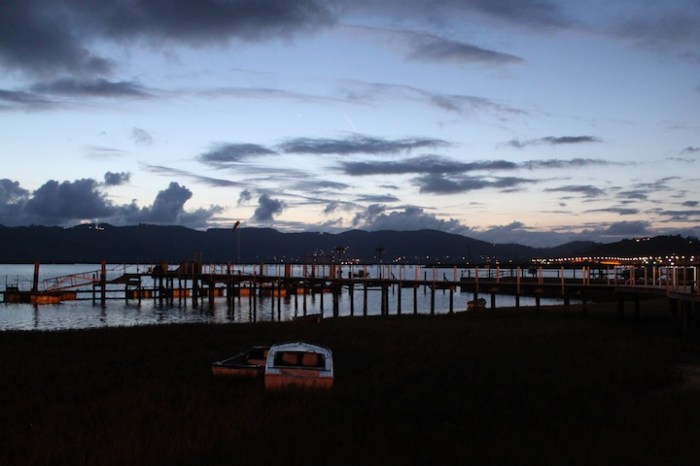
Knysna lagoon

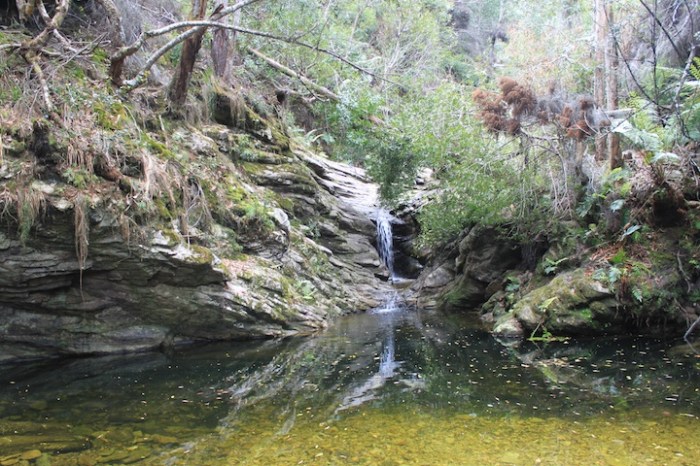
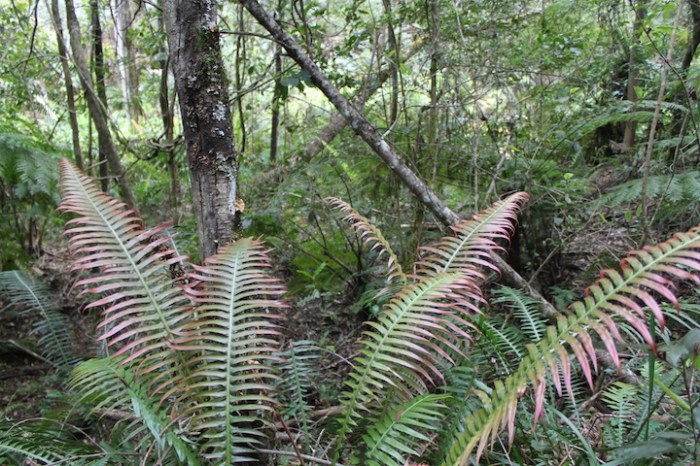
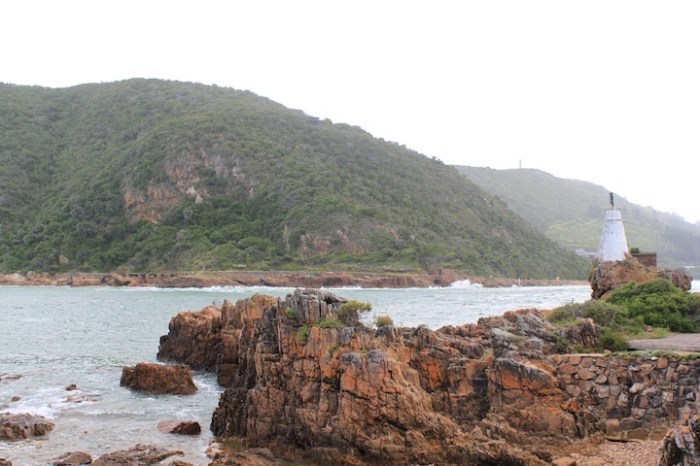
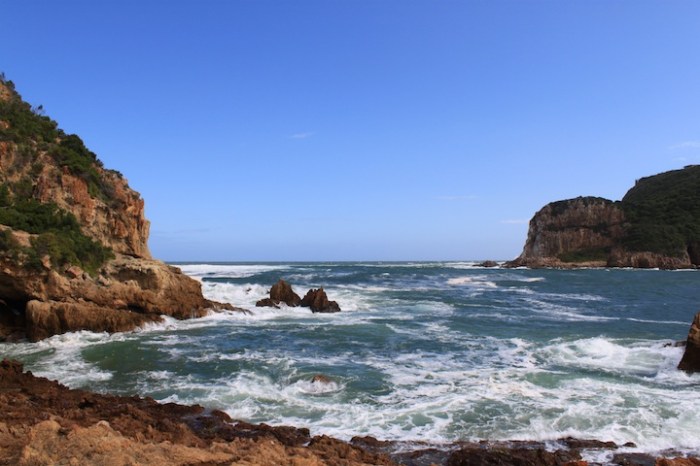
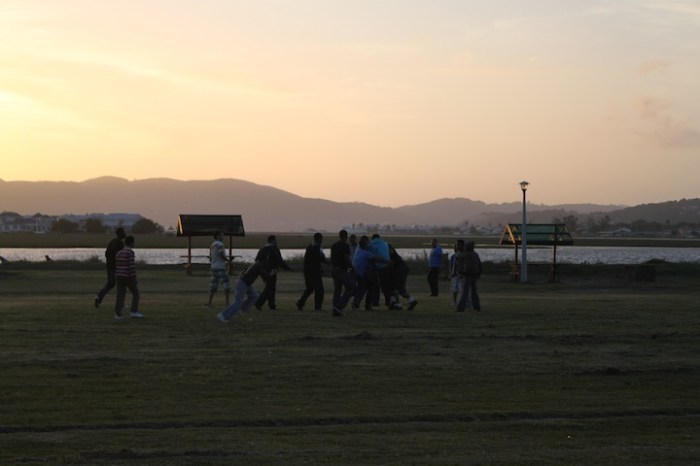
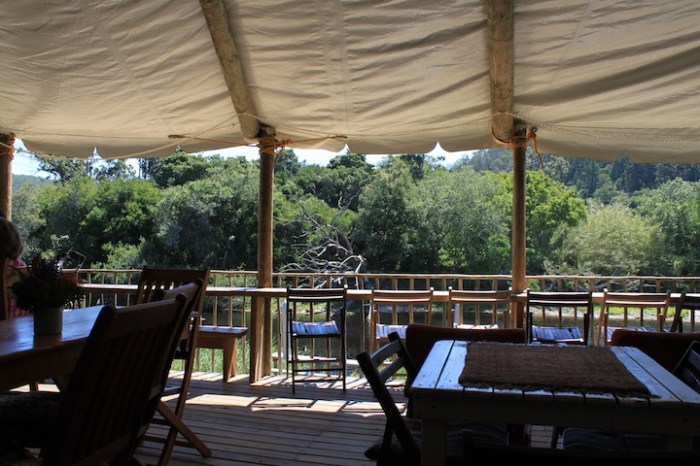
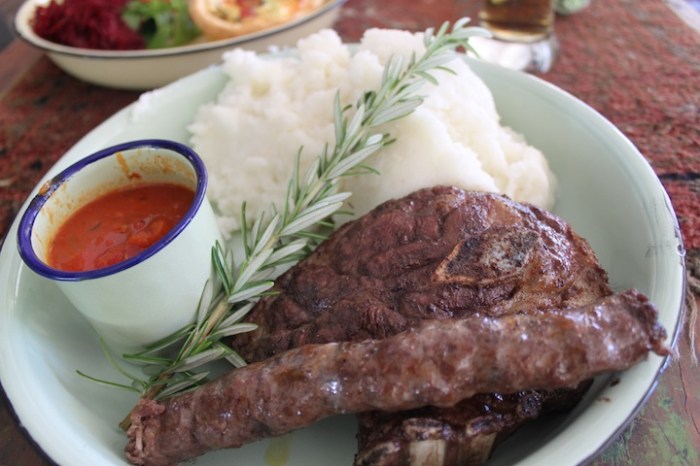
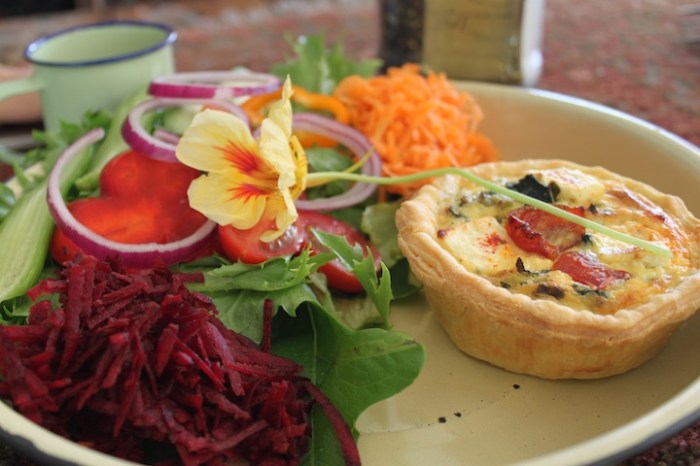
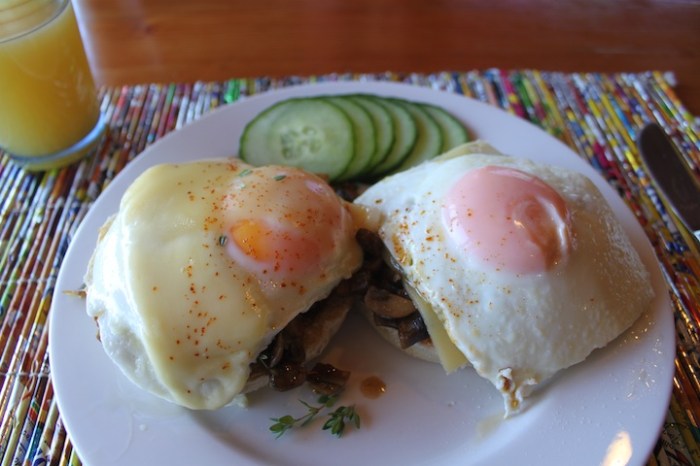
We spent the next few days enjoying the natural beauty around us with hikes in the ancient forests around Knysna, heading to look out points to take in the two cliffs, called the Knysna Heads, that create a dramatic entrance from the Indian Ocean into the lagoon, checking out all of the unique, crazy-looking birds around the lagoon (a bird watchers paradise!) and stopping to watch impromptu rugby matches on evening strolls. We checked out the Wild Oats farmer and crafts market, the beautiful and almost deserted white sand beaches of Buffalo Bay and had an awesome “slow food lunch” overlooking a river in the Goukamma Nature Reserve. But I think our favorite part about Knysna was our B&B hosts, Margo and Agnieszka, two of the nicest and coolest gals around! We couldn’t get enough of Agnieszka’s ridiculously delicious two-course, gourmet breakfasts each morning and loved hanging out and chatting with them over amazing fresh-pressed coffee and good tunes before we started out each day.

Knysna Heads
Jubilee Creek Walk
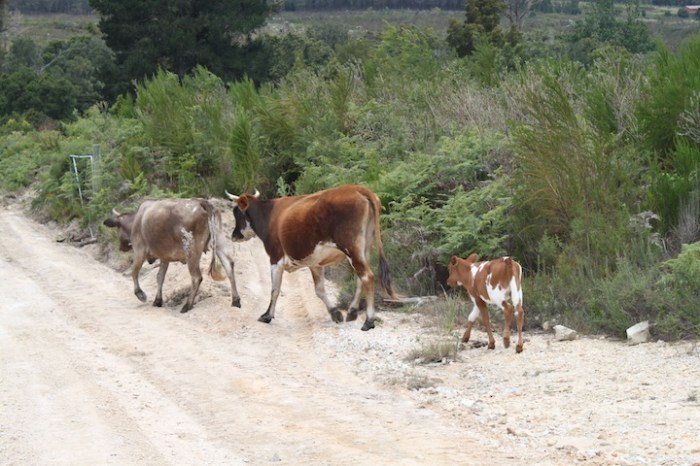
In the forest A nice cow family strolls past us on our walk
Looking into the lagoon
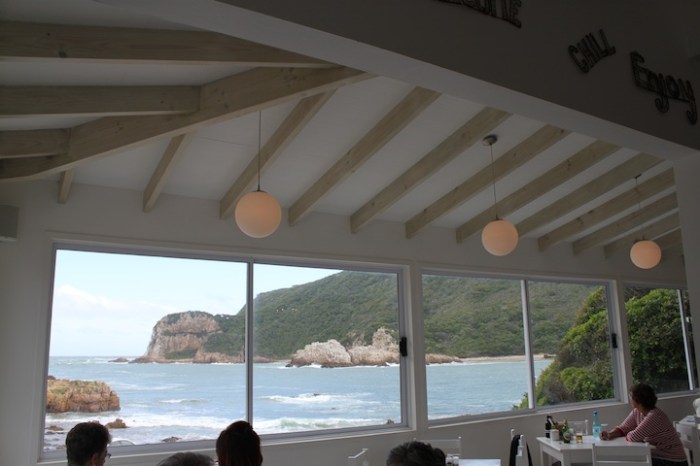
View from East Head Cafe Best. Dessert. Ever.
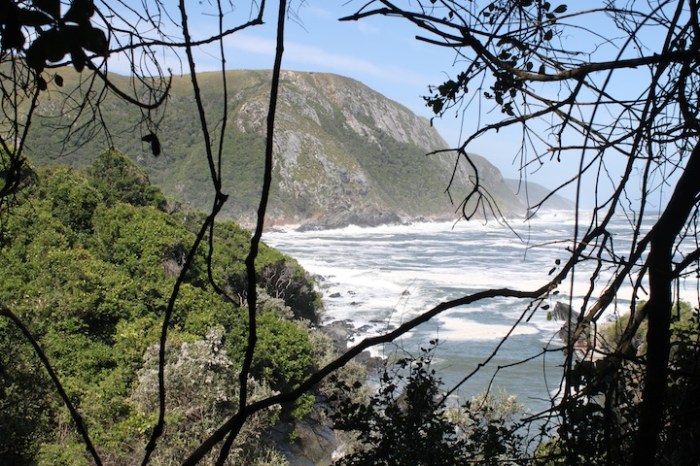
The Heads leading out to the Indian Ocean
Rugby at sundown
Wild Oats farmers’ market Buffalo Bay
Buffalo Bay
The River Deck
Johnny’s braai (bbq) My delicious quiche
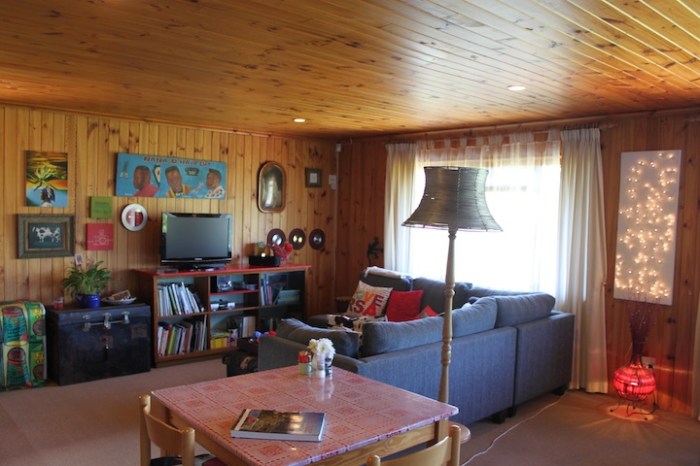
Our B&B, 9 On Heron
The breakfast room at 9 on Heron Agnieszka’s yummy “course 2” of breakfast
The tropical gardens outside our room

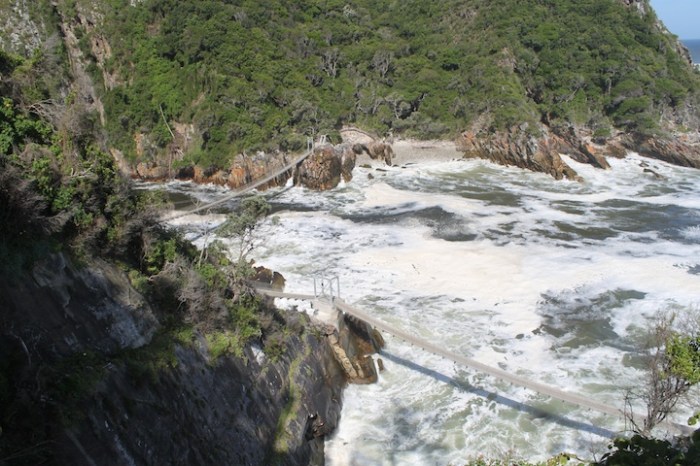
After a lovely few days in Knysna, we packed up our things, hit the store for lunch and dinner supplies and headed off for Tsitsikamma National Park. Wow, was this place unbelievable! Tsitsikamma, meaning “place of much water,” lives up to its name with a stunning stretch of coastline, where we were lucky enough to camp out for the night. After taking a hike to the three suspension bridges dangling over the rocky coast at Storms River Mouth, we grabbed a couple bottles of my new favorite beverage, Savannah Dry Cider, and settled in at our cozy “forest hut” just a few feet from the crashing waves. The waves were huge, and it was great entertainment just sitting and watching the giant sprays of whitewash and resulting rivers of foam. We met a couple other campers from Holland and Zimbabwe cooking up our pasta that evening in the camp kitchen and hit the sack early in preparation for our long drive to Hogsback the next day.

Suspension bridges
Crazy amounts of foam A view from our walk to the bridges
Our camp site
The camp grounds were so nice…there was even a pool
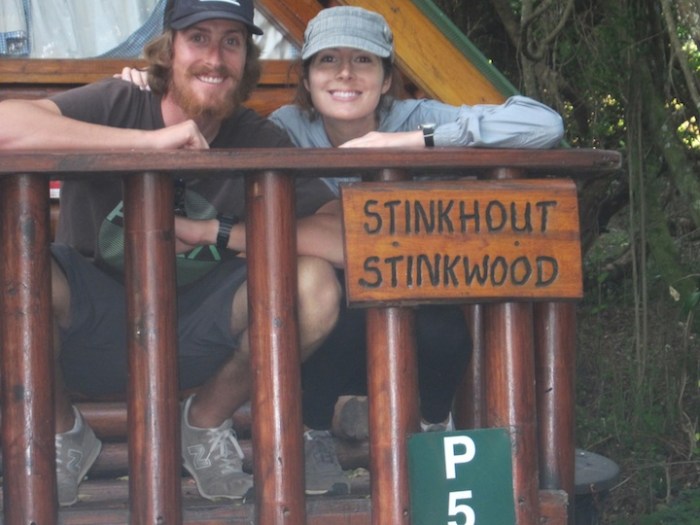
Our “forest hut” for the night The Sherwoods got the Stinkwood hut!
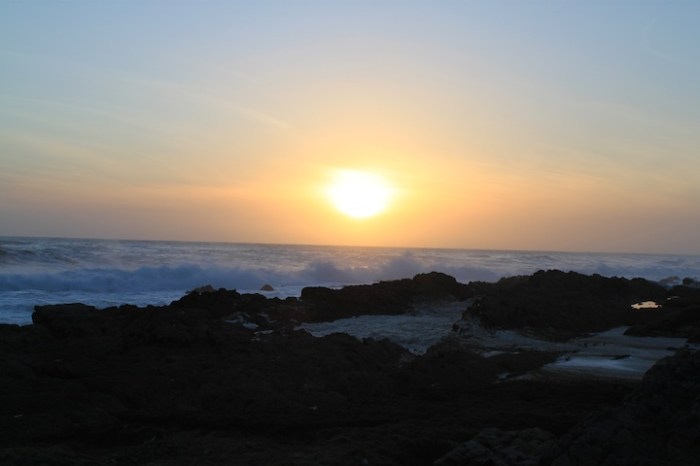
Sunset
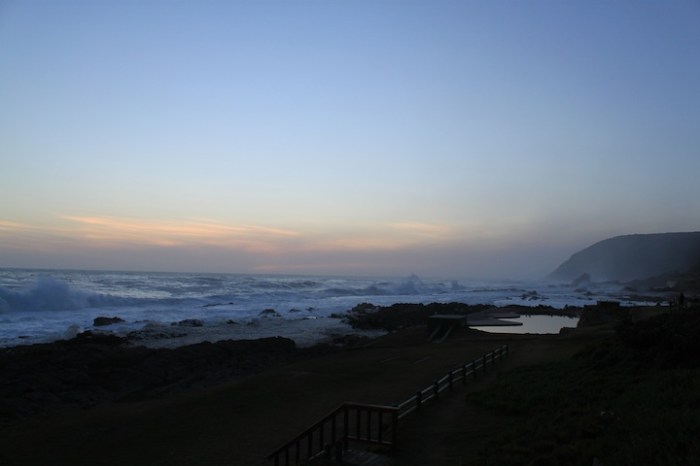
The campgrounds at dusk

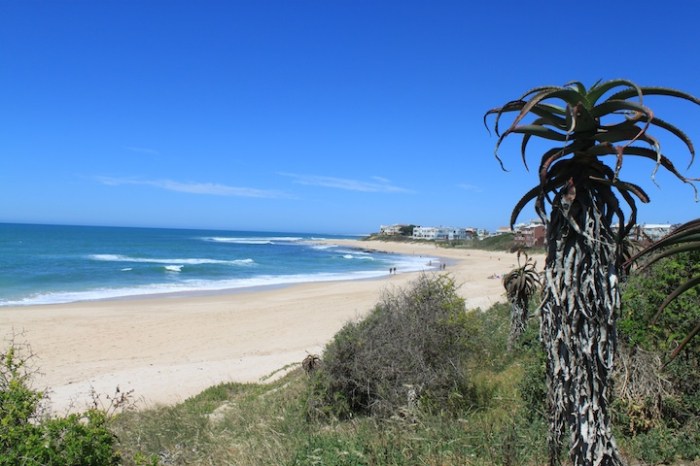
We almost wished we could have stayed longer at Tsitsikamma, as it was so beautiful and serene as we headed out early that morning. We decided we’d drive about an hour to Jeffrey’s Bay, aka J-Bay, for breakfast and hopefully check out some of its acclaimed surf breaks like Super Tubes. Unfortunately, J-Bay was as flat and calm as a lake, but it was still a beautiful spot to see while we filled up on French Toast and coffee.

J-Bay
November 5, 2011

The Winelands

by Johnny

Seeing as how we’ve already visited the wine regions of France, Portugal, Italy and Croatia, we thought it only fair to add South Africa to the list…strictly for comparison purposes.  Only about an hour northeast of Cape Town lie the Cape Winelands, South Africa’s most famous wine producing area.  Fun fact…South Africa has the oldest wine industry in the world outside of Europe.  We drove through the university town of Stellenbosch before arriving at our home base of Franschhoek.  Franschhoek was settled over 300 years ago by French Huguenots, who brought with them their love of food and wine.  Today it is know as the culinary capital of South Africa…and we decided to take full advantage of this fact.

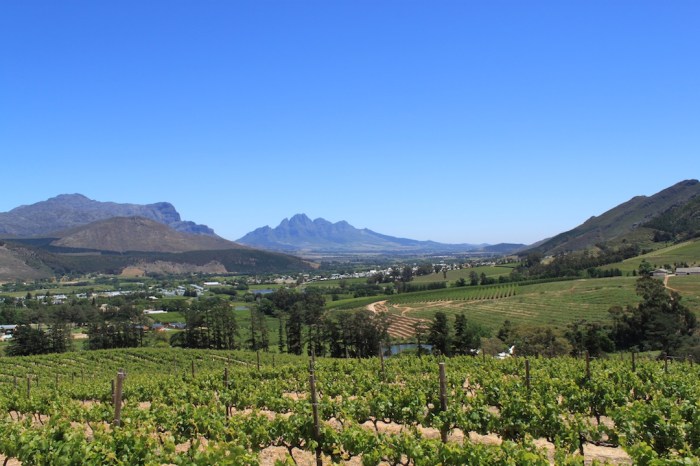
We had an absolutely amazing dinner at the locally-recommended Reuben’s on our first night before settling in early to get a good night’s rest from some serious wine tasting the next day.  We woke up to our first cloud-free day in South Africa, ate some breakfast, grabbed our map and set off on foot to some of the nearby wine farms.  We were happy to discover that 1) South Africa has some tasty wines, and 2) wine tasting in South Africa is pretty cheap.  At each wine farm, we were able to taste any four or five wines of our choice for 15 rand (about $2).  “Umm, yes, I’ll try the five most expensive, please.”  We really liked the Merlot and Pinotage (the region’s signature grape…a cross between Pinot Noir and Hermitage) at Chamonix, the view of the entire valley at Dieu Donné, and our mouthwatering wine and lunch combo at Mont Rochelle’s Country Kitchen (one of Anna’s favorite meals of the trip).  It was an amazing day, even if we ended up only visiting three of the five wineries we planned on and were too pooped to go out to dinner later that night (imagine that!).  Although it feels a little more like Napa than Africa, Franschhoek is definitely worth a night or two to enjoy some of the best food and wine South Africa has to offer.

The view from Dieu Donné
We picked up some goodies at Mont Rochelle Red wine for Red Beard
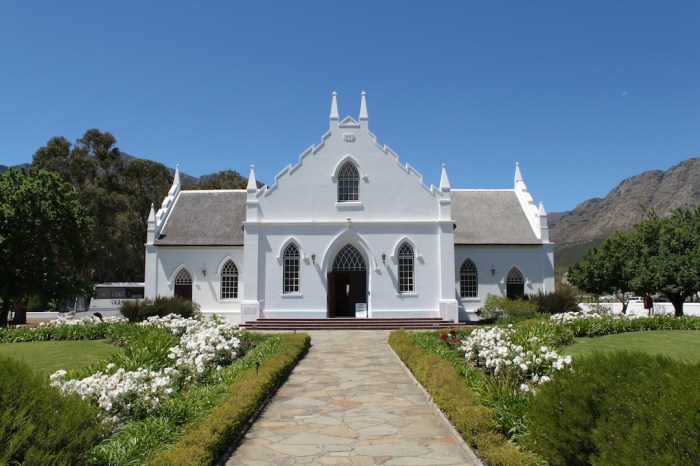
Lots of roses and pretty buildings in Franschhoek Church in Franschhoek
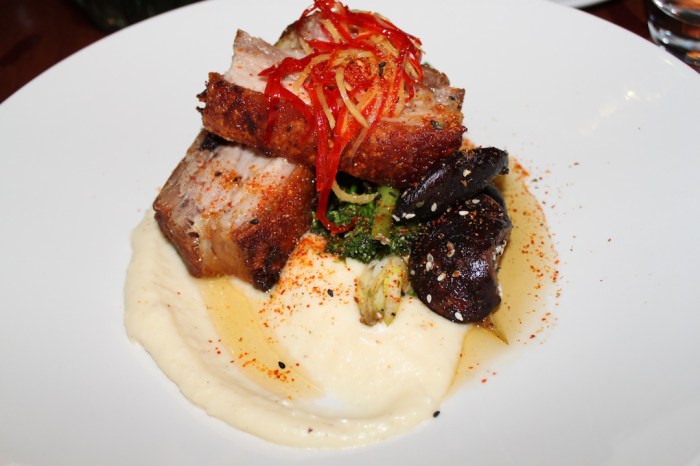
Pork belly from Reuben’s…mmmmm
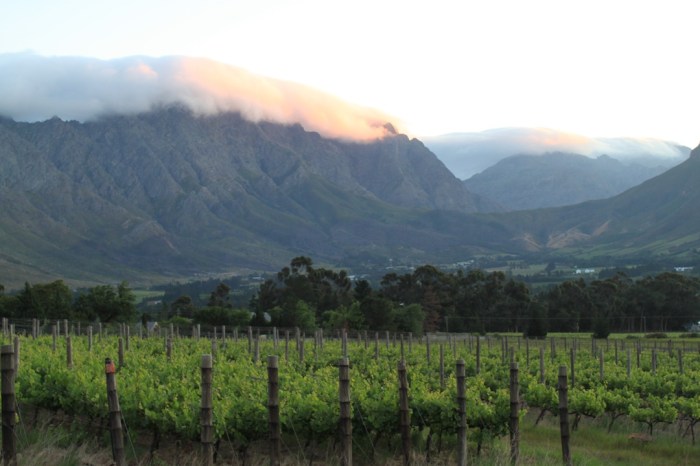
Clouds creeping over the mountains
November 2, 2011

All Around Cape Town

by Anna

We loved our time spent exploring in and around Cape Town – so much vibrant culture and gorgeous natural beauty to see. Here are some of the highlights from our week:

V&A Waterfront and Downtown
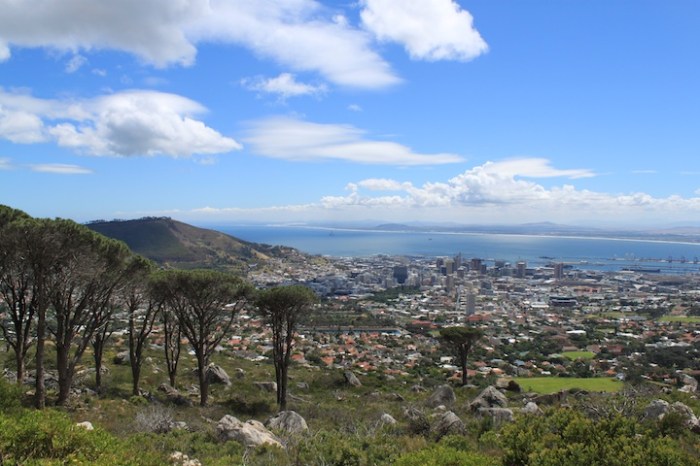
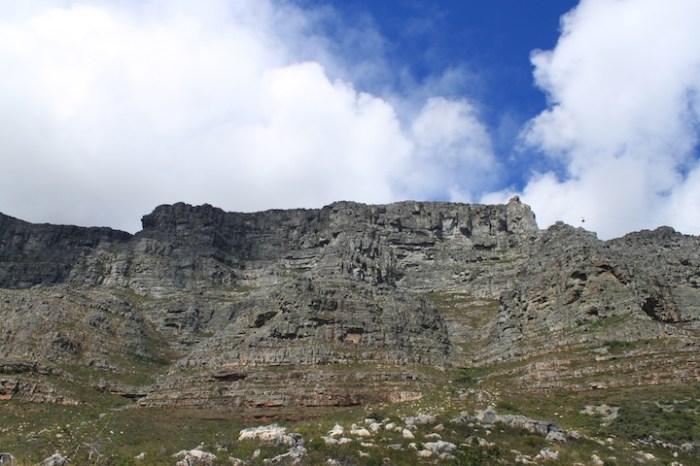
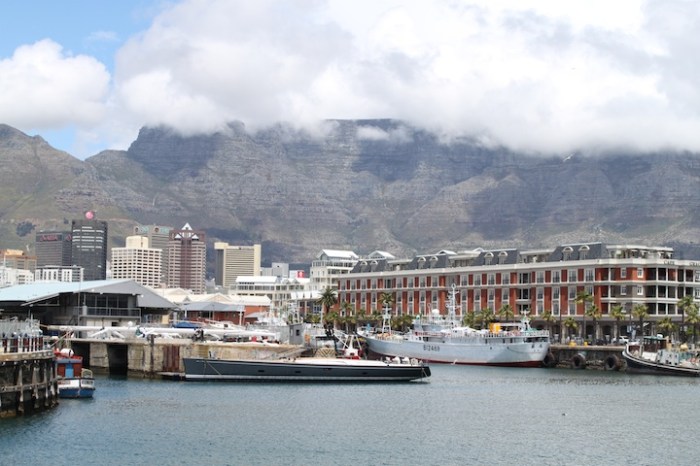
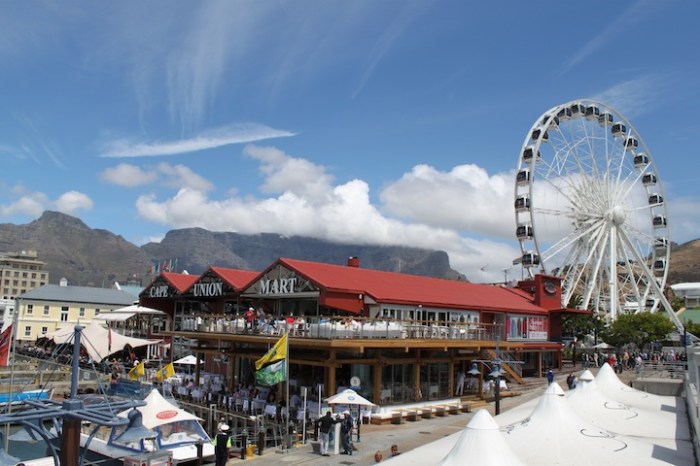
The V&A Waterfront had been described to us by many friends as “the Fisherman’s Wharf” of Cape Town. It definitely reminded us of that with its noisy, colorful restaurants and shops lining the boat-packed harbor. Even though a bit touristy, it was a beautiful spot to walk around, get lunch and gaze up at the magnificent Table Mountain. Moving into the heart of the city, we stopped by Green Market Square to check out the stalls filled with jewelry, crafts and souvenirs, and walked over to Bo-Kaap, “The Cape Malay Quarter,” known for its brightly painted houses, cobblestone streets and multicultural neighborhood on the slopes of Signal Hill. We also tried to visit the District Six Museum, but it was closed for renovations. In the process, however, we met one of the founders of the museum who had been a resident of District Six. He shared his story and heartbreaking accounts of families torn apart during apartheid, resulting in a much more personal and touching experience than we would have had just visiting the museum.

,

Neighbourgoods Market
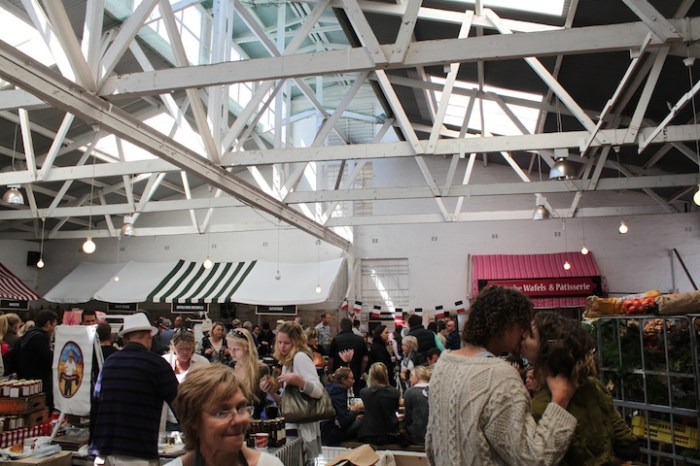
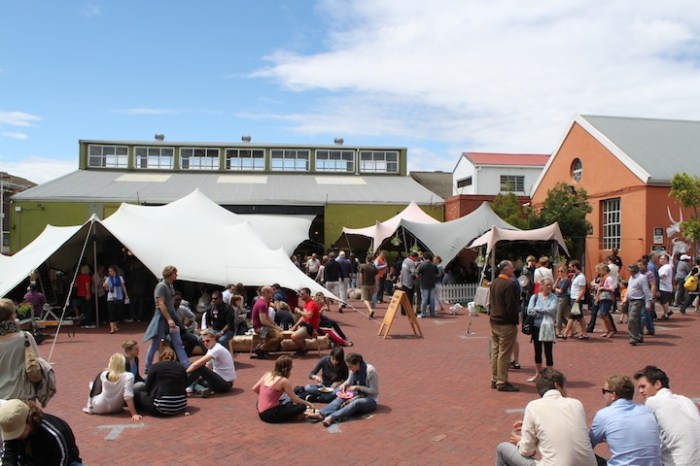
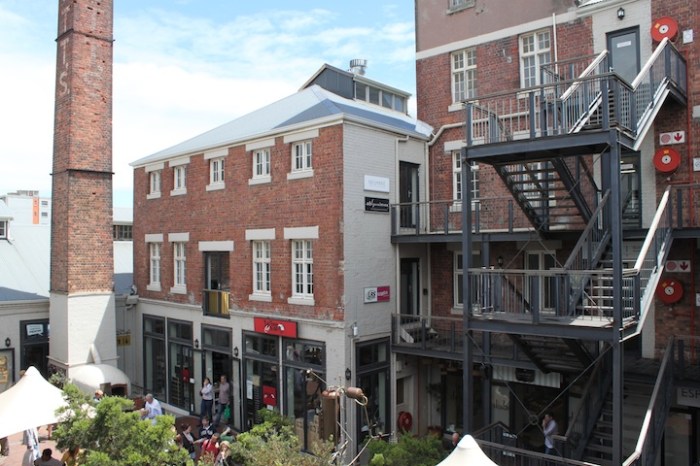
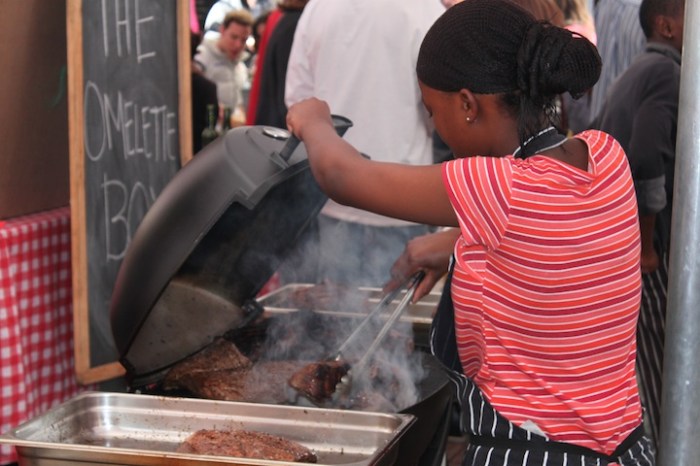
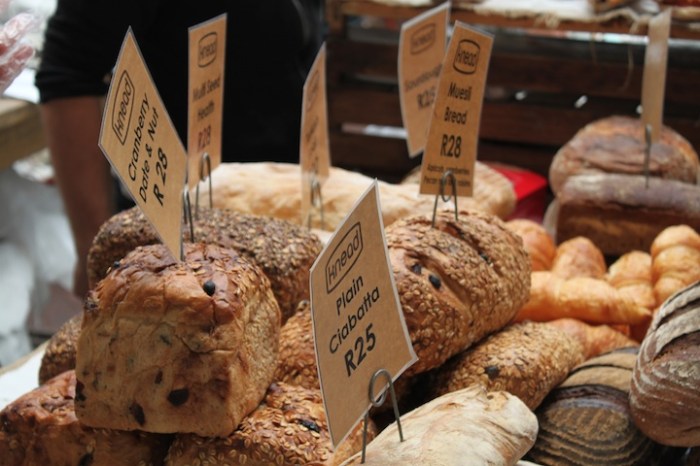
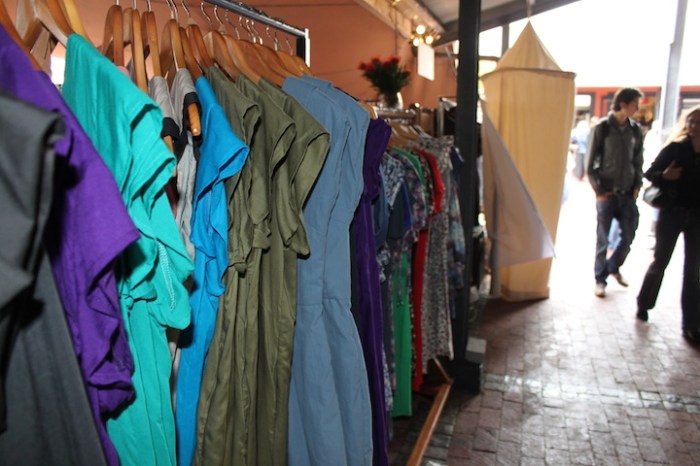
On Saturday morning we had one of our favorite experiences of Cape Town, the Neighbourgoods Market. Johnny had read that it was a cool spot in the emerging neighborhood of Woodstock to check out, so we decided to give it a go. Little did we know what an amazing, sensory overload of food, atmosphere, crafts, fashion and community awaited us. It was the most awesome, heady place of all times, and we didn’t want to leave! We spent a couple hours just looking at all the food stalls and wandering through the shops before deciding on a crepe and champagne (for me) and a microbrew and BBQ steak sandwich (for him, of course!), which we enjoyed at one of the many candle-lined family style tables. Since I can’t do the place justice in words, here is a better description from the website/blog (which is also really awesome!):

The Neighbourgoods Market is an independent initiative … whose aim is to revive and reinvent the Public Market as a civic institution. This award-winning market features over 100 specialty traders every Saturday, creating a weekly platform for local farmers, fine-food purveyors, organic merchants, bakers and distributors, grocers, mongers, butchers, artisan producers, celebrated local chefs, and micro enterprises. The Neighbourgoods Market is housed in an old sky-lit Victorian warehouse and courtyard at the Old Biscuit Mill in the emerging industrial neighbourhood of Woodstock, Cape Town. It is as much a source for farm fresh… goods, as it is a meeting point to enjoy community, swap ideas and stories, and become educated about what we buy and eat by going directly to the source. The Neighbourgoods Market has been created along ethical, eco-friendly and organic lines, to offer a wide range of products from the extended community of Cape Town.

Kirstenbosch National Botanical Gardens
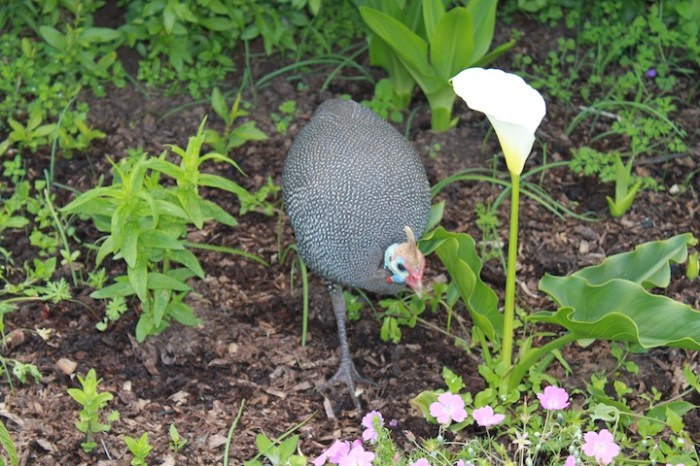
The beautiful Kirstenbosch Botanical Gardens back up to the eastern slopes of Table Mountain, making for a pretty breathtaking setting. You could easily spend an entire day wandering through the tranquil gardens, and we passed many people picnicking, sketching or just napping on the expansive lawns dotted with funny little guinea hens. The gardens are part of the Cape Floral Kingdom, and both the region and the gardens were listed as a UNESCO World Heritage Site in 2004 (you know how we love the UNESCO!), making it the first botanical garden in the world to be on this list. We would have loved to have checked out one of the open-air concerts that are held here in summer, but just missed them by a couple of weeks.

Hout Bay
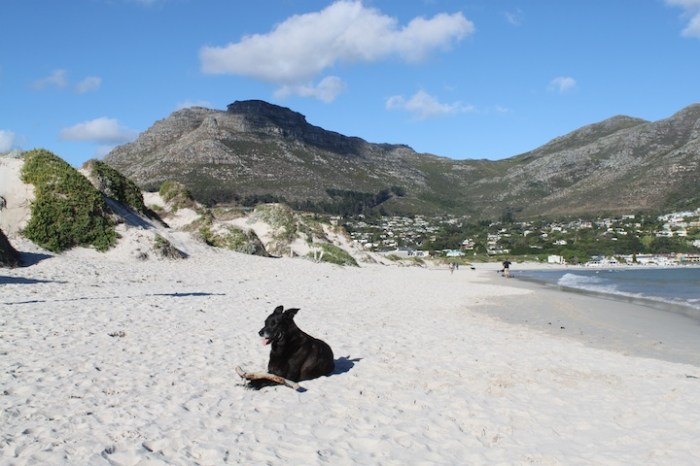
We were really happy that we picked Hout Bay as our base to explore Cape Town. As you already read, we were instantly in love with Poplar Tree Lodge and the beautiful bay below it, and we even loved the stunning drive along the coast, through Camps Bay to Cape Town. We took a late afternoon stroll one day along the white sandy beach and watched the sun go down in the company of tons of happy dogs running along the sand dunes and in and out of the water fetching sticks. We ended our walk with some delectably greasy, down and dirty fish & chips at Fish on the Rocks which had a million dollar location right on the harbor.

Kalk Bay
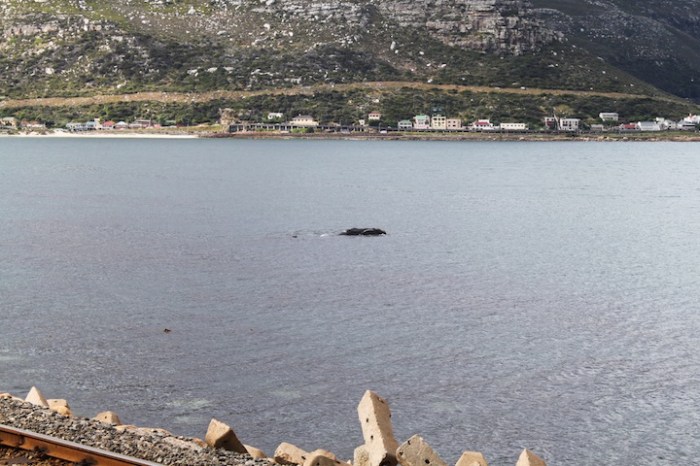
Although we had driven through Kalk Bay on the way down to Cape Point, we decided to go back so that we could spend more time “behind the lentil curtain” and check out the town’s main drag of craftsy shops and restaurants. We were so happy we did, because not only did we love the Bohemian/artsy vibe of Kalk Bay, but we also had a delicious lunch at Olympia Cafe (go there if you are ever in Kalk Bay!!) and saw THREE whales along the coastal drive between Kalk Bay and Simon’s Town. We also couldn’t get enough of the cute little furry seals playing in the breakwater at Kalk Bay Harbour. There has definitely been no shortage of wildlife on our adventure thus far!

Now it’s off to give South African wines a little Sherwood taste-test in Franschhoek, the culinary heart of the country…sounds like trouble!

October 30, 2011

Cape Crusaders

by Johnny

We’re in Africa! I can’t believe it. Truth be told, South Africa wasn’t on our original itinerary. It was definitely a place we always wanted to visit one day, but it was just so far away from anywhere else we were traveling to on this trip. I suppose it’s far away from anything else, period. I figured it would be a hectic, expensive detour to get down there and wrote it off for another time. But then once we started telling people about our trip a month or so before we took off, anyone who had been there said emphatically, “You HAVE to go to South Africa.” OK then. We did some more research (errr, re-watched Brad Womack’s second go-round on The Bachelor), found some surprisingly cheap flights in and out of the country and decided to take the plunge.

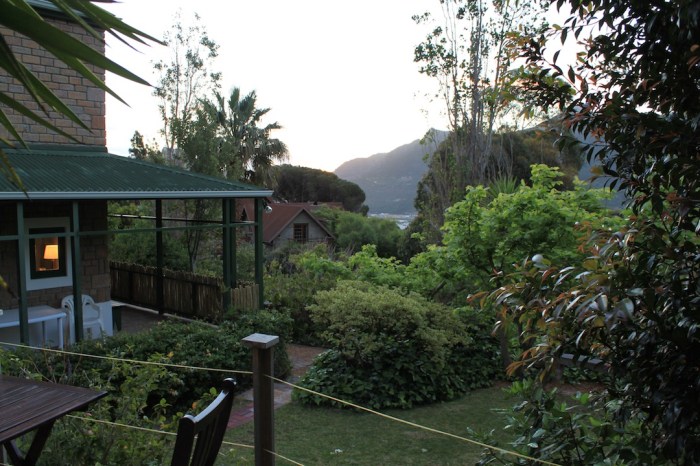
We flew from Istanbul to Cape Town (never thought I’d say that in my life) and made it to Poplar Tree Lodge in the suburb of Hout Bay, our base to explore Cape Town and the surrounding region for the next week. Apologies if it sounds like we keep plugging our accommodation, but we’ve been having great luck lately…especially with this one. The setting is stunning, the garden is beautiful and full of life, and the owners are super friendly. Vivienne made Anna a beaded necklace so that she would always remember her time in South Africa, and Marshall makes fun artwork out of driftwood and plastic bottle tops he finds on the beach. It definitely has a homey feel to it, and we love coming back here for some wine on the deck after a day out.

View from the deck at Poplar Tree Lodge
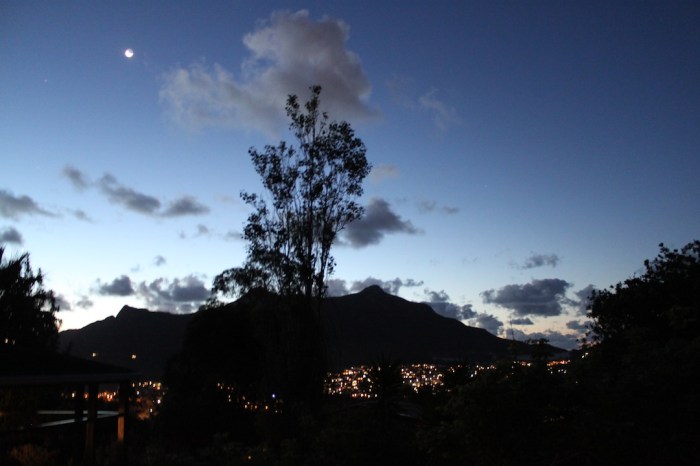
Mountains behind Poplar Tree Lodge Our Hout Bay digs
Marshall’s creations…The Herd Dusk on the deck

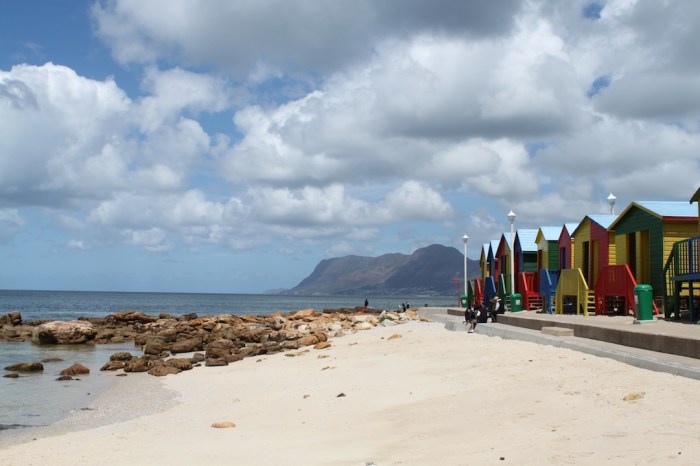
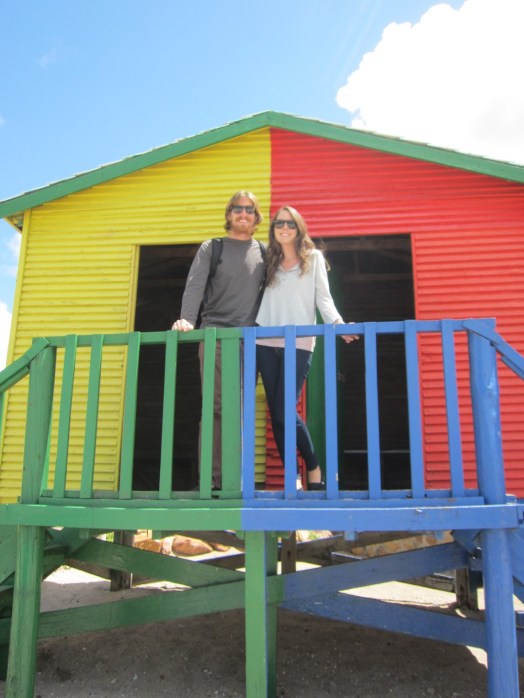
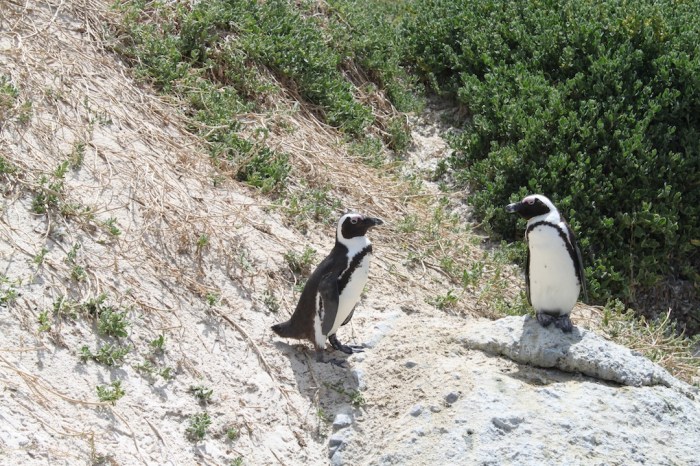
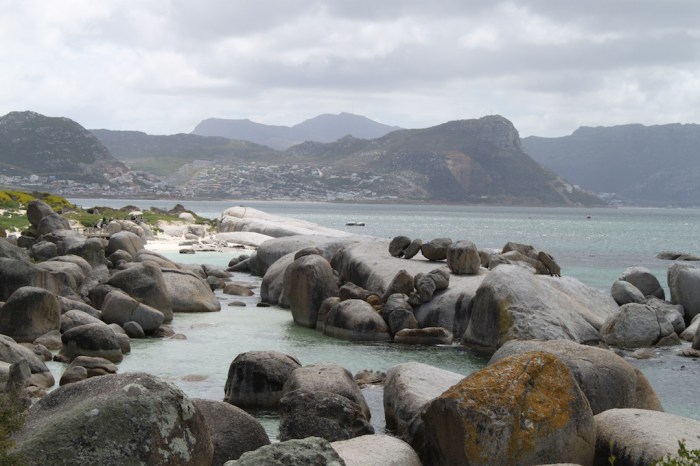
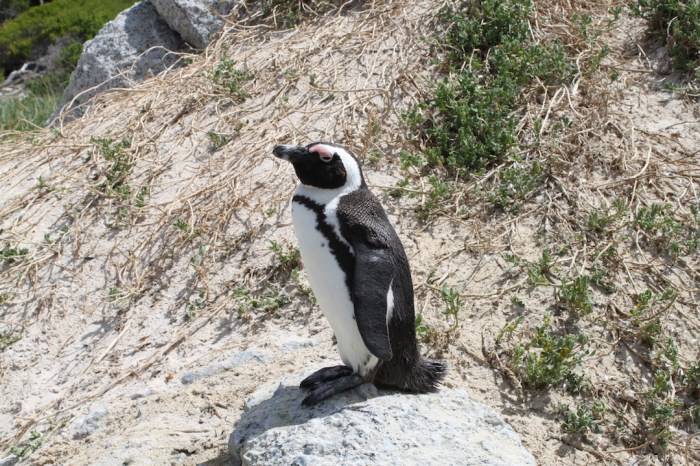
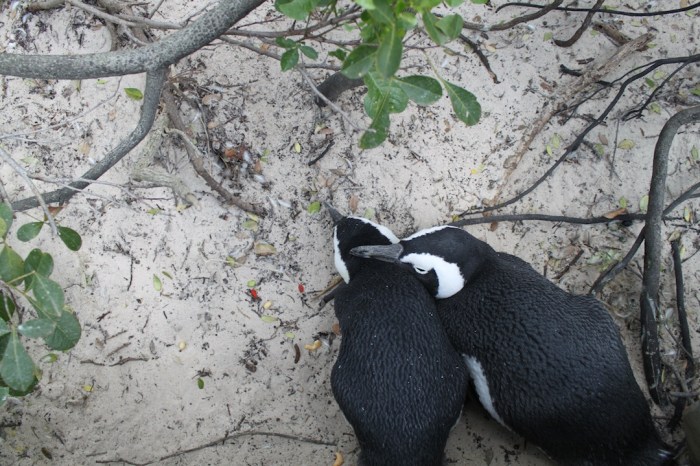
I most definitely needed some practice driving on the left side of the road, so rather than venturing into the traffic-filled city on our first day we set out to explore the Cape Peninsula. We headed towards the towns on False Bay on the eastern side of the peninsula, stopping first to see the colorful bathing house at the beach in St. James. According to our coffee barista, we were now crossing the “lentil curtain” that separates cosmopolitan, ritzy Cape Town from Bohemian, hippie Cape Town. Good to know. We wanted to stop in Kalk Bay to check out some of its boutique shops and galleries, but some road construction made this new-to-the-left-side driver panic and we drove right through. Oops. We continued on through the scenic Fish Hoek Bay and Simon’s Town until we reached Boulders Beach, famous for being home to a colony of 3,000 African penguins. Neither of us could say we’d seen a penguin in the wild before, so this was pretty cool. I dare you not to smile watching them walk around.

Colored bathing houses at St. James St. James
Presumably talking about fish and fantasy football
Boulders Beach…not just a clever name Standing guard
Awwwwww

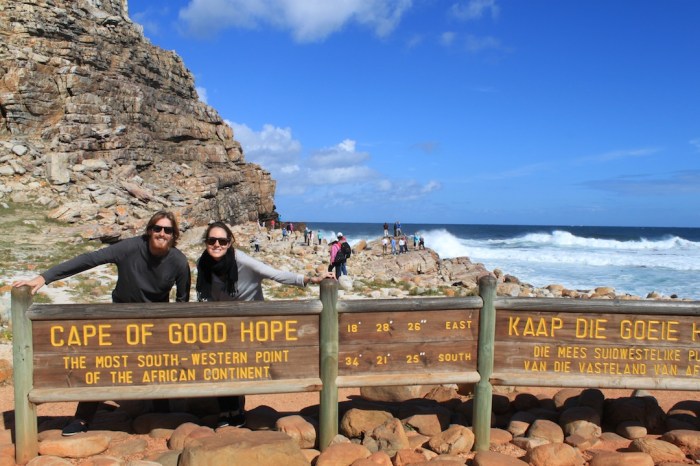
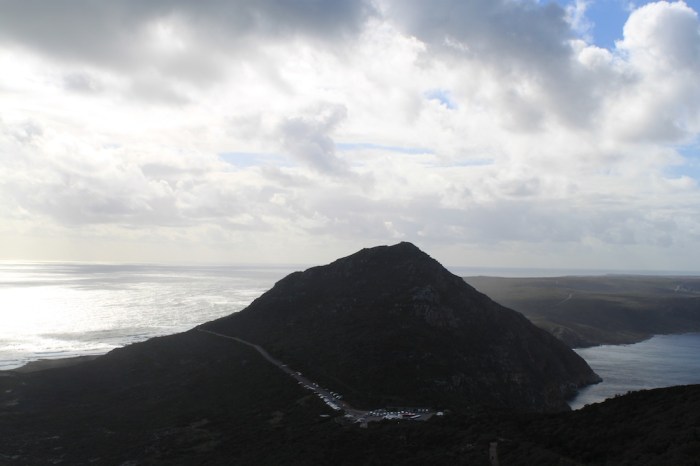
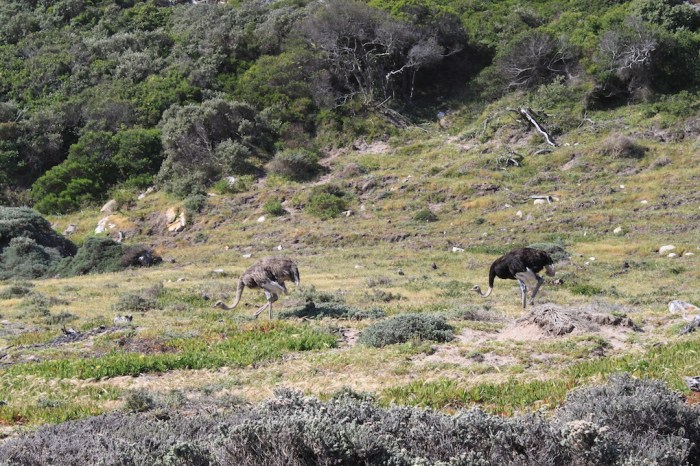
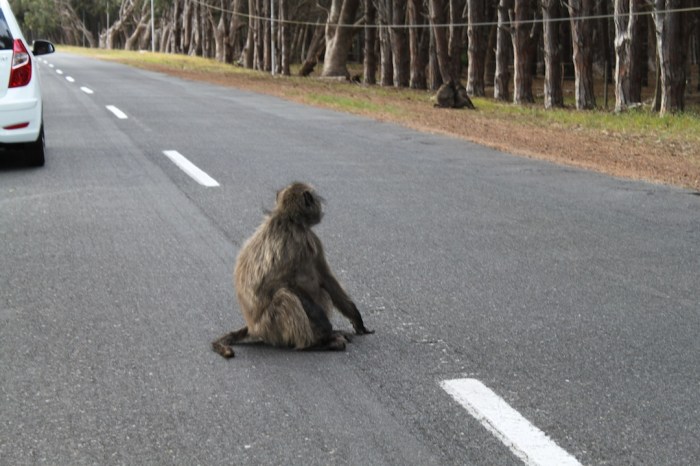
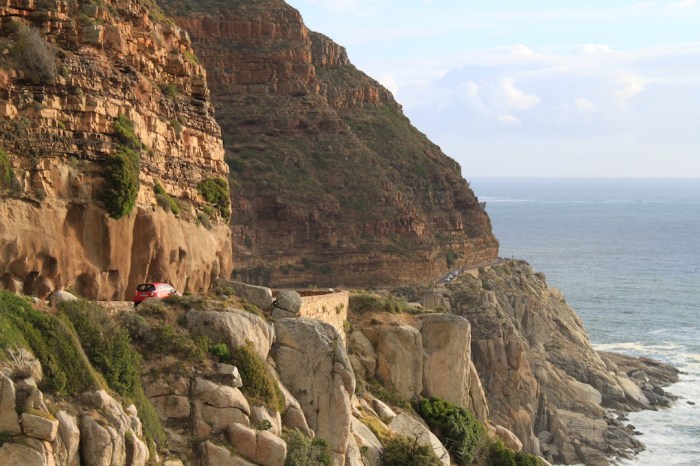
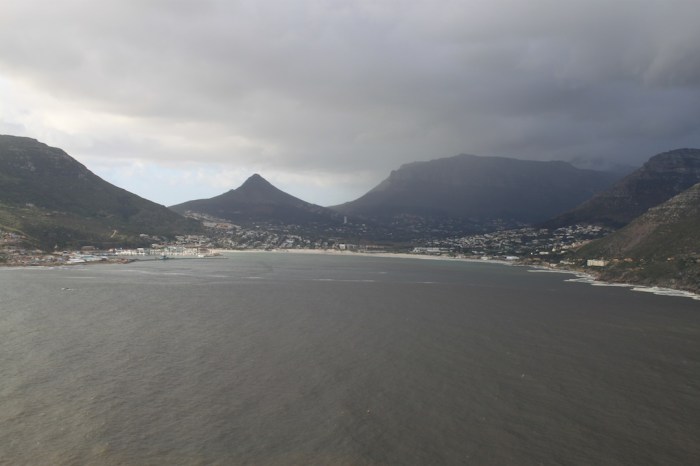
We continued south into the Cape of Good Hope Nature Reserve. Wow! I expected the Cape Peninsula to be beautiful, but not this beautiful. Wildflowers, deserted white sand beaches, windswept coastlines, red and green mountains sloping into a tropical sea…it’s incredible. We stopped at the Cape of Good Hope, the southwestern most point of all of Africa, and at Cape Point to see its famous lighthouse. As if we needed to be reminded we were in Africa, we saw some wild ostriches and baboons as we were leaving the park.  There must have been 20 baboons, including a handful of babies.  I wanted to get some better pictures, but one of the big ones stared directly into my eyes and my soul so I sped away. We made our way back to our apartment in Hout Bay slowly but surely along the Atlantic side of the peninsula. The last few kilometers of this drive are known as Chapman’s Peak Drive, and it makes driving along the coast in Big Sur seem like a walk in the park. We would stop every couple of minutes for some pictures and for me to change my pants.

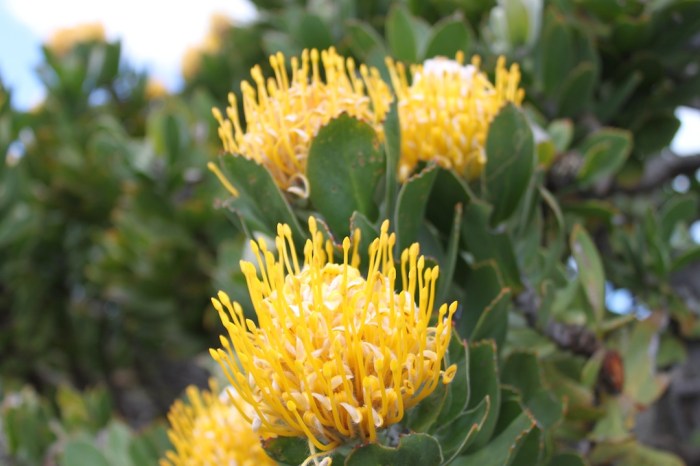
Flora in the Cape of Good Hope Nature Reserve
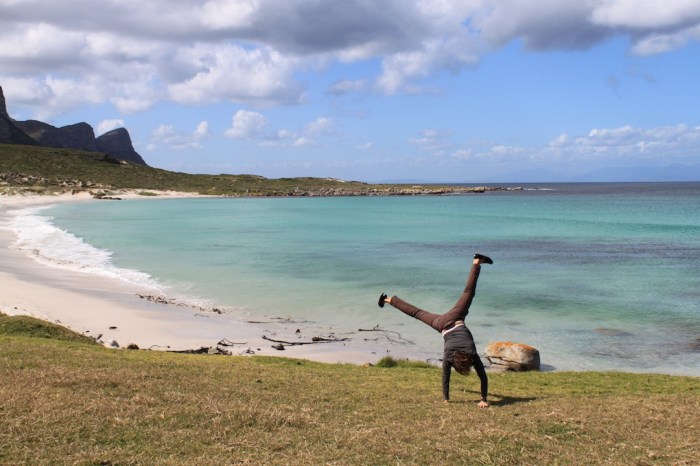
2016 Olympic hopeful at Buffels Bay
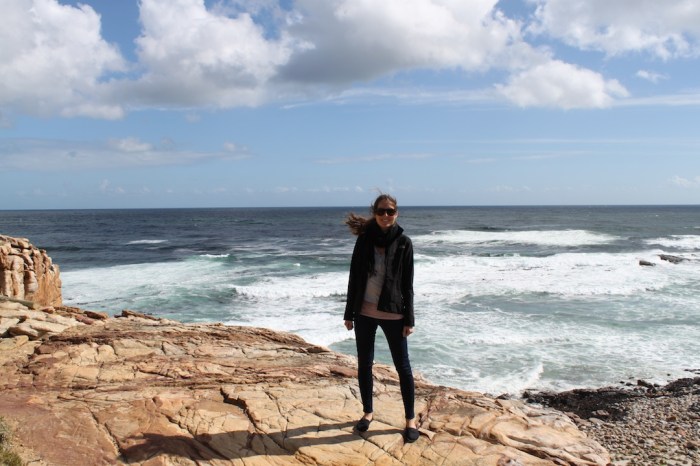
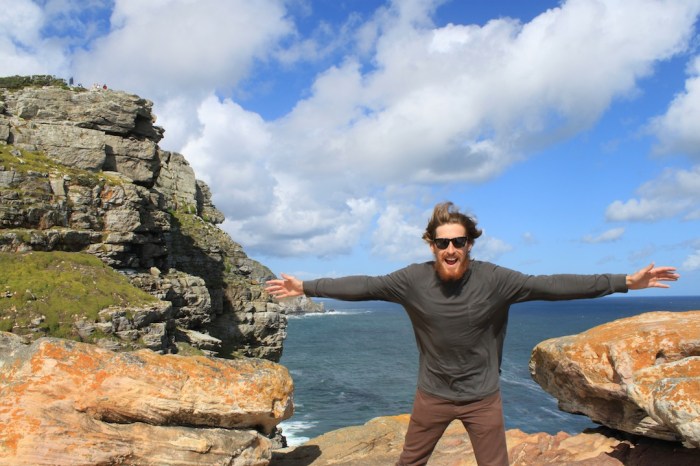
Cape of Good Hope A little windy out on the Cape of Good Hope
Cape Point lighthouse View from Cape Point
Wild ostriches…are we in Jurassic Park? Baboon crossing
Chapman’s Peak Drive View towards Hout Bay from Chapman’s Peak

We’re pumped to finally have our own wheels, and for the next month we’ll be making our way from Cape Town in the west to Kruger National Park in the east, with pit stops along the Winelands, the Garden Route, the Wild Coast and the Drakensberg mountains. If the rest of our time in South Africa is anything like our first day, we’re in for an amazing month. However, we’re also in for a very eye-opening experience. South Africa has one of the largest gaps between rich and poor out of any country in the world, and it’s evident immediately. In our 30-minute drive to our apartment from the airport, we saw enormous mansions and wine estates but also several townships where the poverty stricken masses live in a sprawl of tin shacks. Anna and I read up on the history of South Africa and especially the apartheid era before coming, and it’s definitely heartbreaking. It should be an interesting month, that’s for sure.

October 29, 2011

Turkish Delight

by Johnny

To be honest, Anna and I had some initial reservations about traveling to Turkey.  As our guide at Ephesus nicely put it, “Turkey is in an interesting neighborhood.”  Now that our time in Turkey has ended, we can’t say enough good things about the country.  We’re so, so glad we decided to travel there.  It definitely “wowed” me more than any other country on our trip so far.  In just a little over a week we saw ancient history in Ephesus, a one-of-a-kind landscape in Cappadocia and a world-class city in Istanbul…and we barely scratched the surface of all Turkey has to offer.  And don’t even get me started on the food.  But what we will remember most about our time in Turkey is the people and the millions of laughs we shared.  Our guidebook says, “All the peoples of Turkey tend to be family-focused, easy going, hospitable, gregarious and welcoming of visitors.”  This, times a million.  I’ve never met a group of friendlier, more helpful people in my life.  Whenever we were lost looking at our map, somebody would ask us if we needed help finding someplace (and usually walk us halfway there).  I can’t tell you how many times we were stopped on the street with, “Hi.  Where are you from?  How are you liking Turkey so far?  Can I offer you some tea?”  And no, it’s not just merchants trying to give you the runaround.  When I was finding an ATM alone one early morning in Selçuk, and old man approached me and told me I should wear some extra layers because it was going to get cold that day.  These are just some small examples of things that would happen everyday.

It’s funny, we wanted to visit Turkey on this trip because it was one of the countries we weren’t sure if we would make a return trip to later in our lives.  However, since we’ve been gone, we keep saying, “Let’s do this next time we go to Turkey.  Let’s stay here next time we go to Turkey.”  Most definitely a special place.

October 28, 2011

Two Continents; One Great City

by Johnny

Have you recovered yet from that atom bomb of knowledge Anna dropped on your dome in the last post?  Good.  We arrived to Istanbul on an overnight bus from Göreme, and with only four nights left before the Europe leg of our travels came to an end, we decided to spoil ourselves a little bit.  We upgraded our room at our B&B to one with a terrace view of the Blue Mosque and the Sea of Marmara, we saw nearly every site we wanted, we bought a couple souvenirs, and we ate baklava after every meal (breakfast, lunch and dinner).

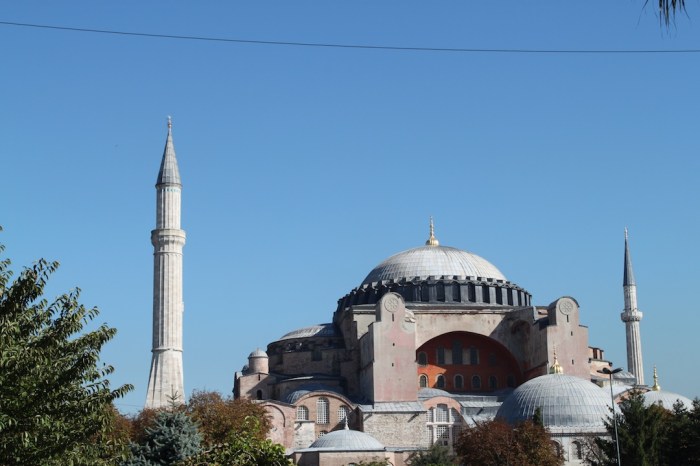
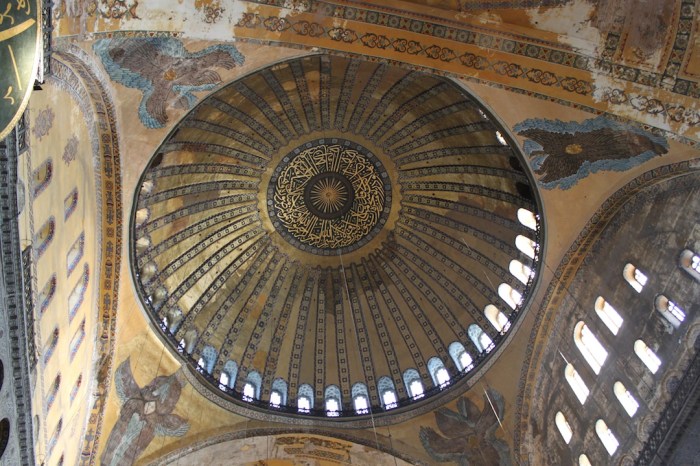
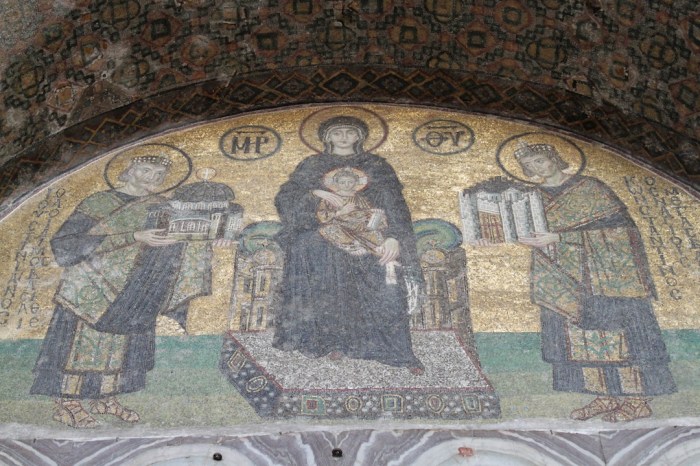
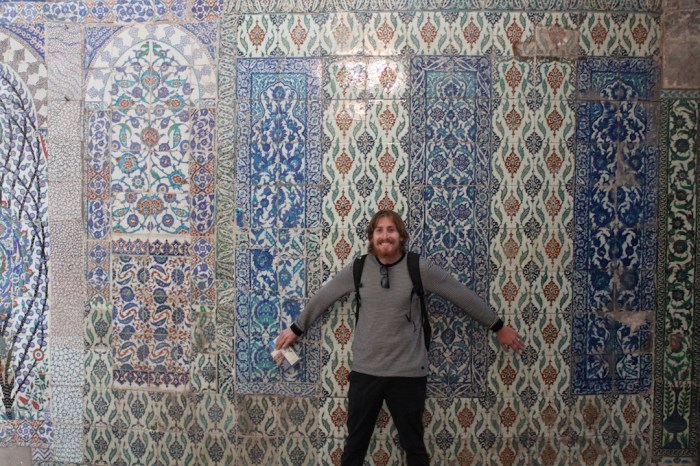
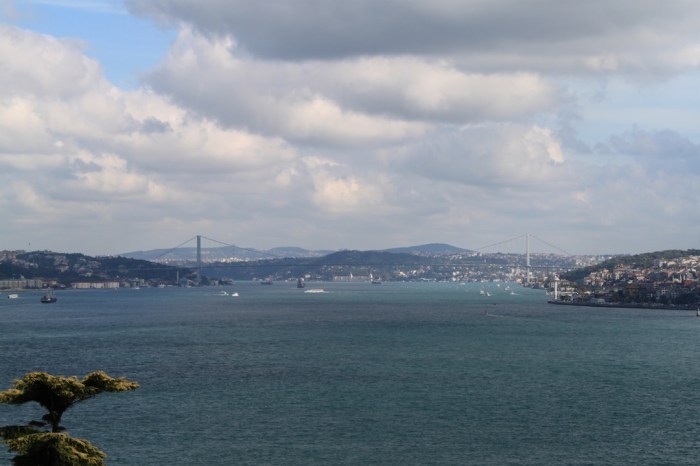
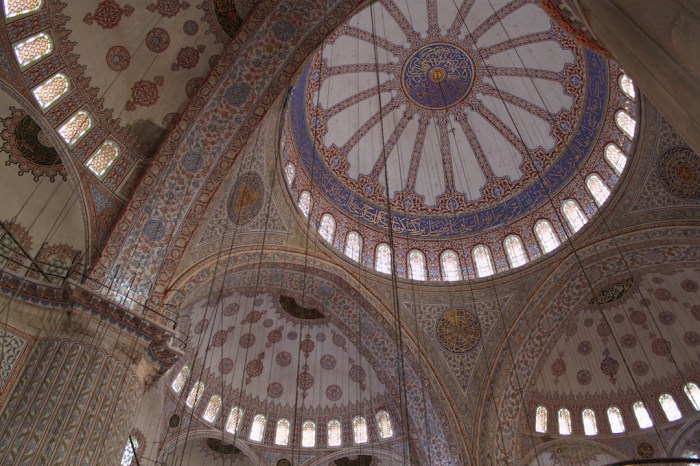
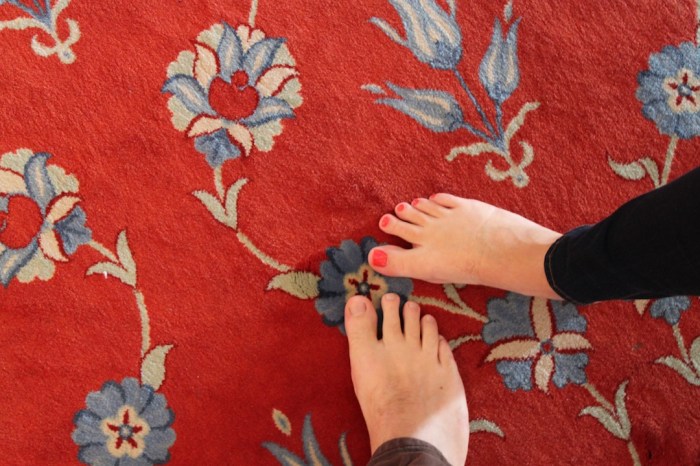
We based ourselves in the area of Istanbul known as Sultanahmet, which is within easy walking distance of the city’s “big three” tourist sights:  Aya Sofya, Topkapi Palace and the Blue Mosque.  I could write pages on the amazing history of these buildings, but I’ll just tell you a couple things we liked about each of them.  In the Aya Sofya, we loved the enormous domed ceiling and beautiful mosaics.  We liked nearly everything about Topkapi Palace (except the crowds), but we were especially amazed by the Harem, where the sultan and the rest of the imperial family lived.  It was a maze of decadently decorated rooms and tiled courtyards.  Topkapi Palace also had some of the best views in Istanbul looking out towards the Bosphorus strait, which separates the European and Asian continents.  The Blue Mosque is beautiful in its simplicity…and you get to take your shoes off when you go inside.

View of the Blue Mosque from our terrace
 
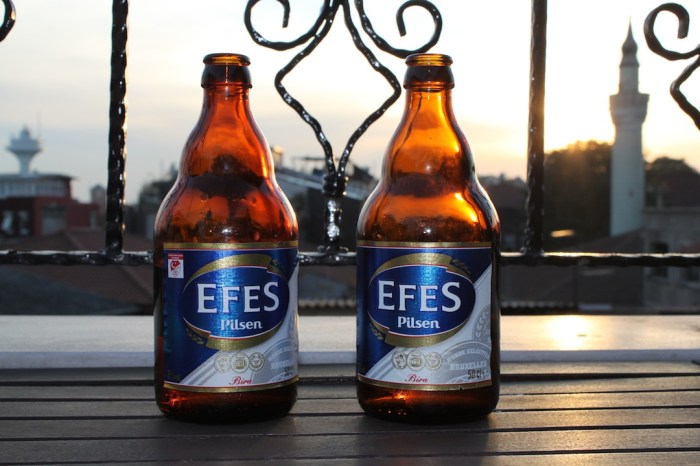
Sunset on our terrace Enjoying a couple Efes on our terrace
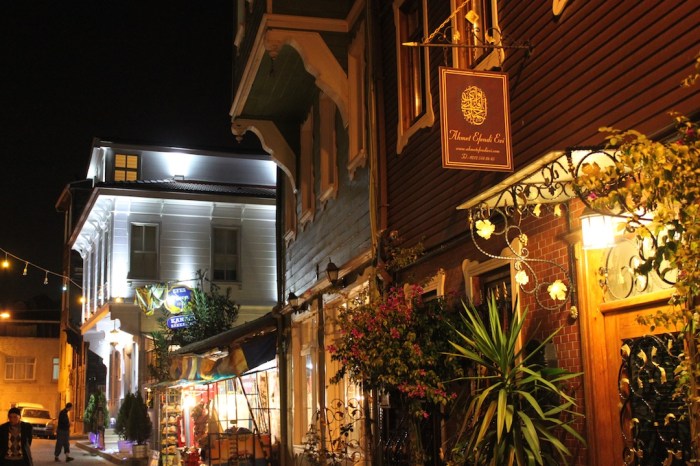
Our B&B, Ahmet Efendi Evi, at night
Aya Sofya
Inside Aya Sofya
Domed ceiling of Aya Sofya Baby Jesus being presented with Aya Sofia and Istanbul
Inside the Harem at Topkapi Palace Fireplace in the Harem
Mother of Pearl furniture in the Harem Thumbs down on the circumcision room
Courtyard of Topkapi Palace View of the Bosphorus from Topkapi Palace
The Blue Mosque
Inside the Blue Mosque
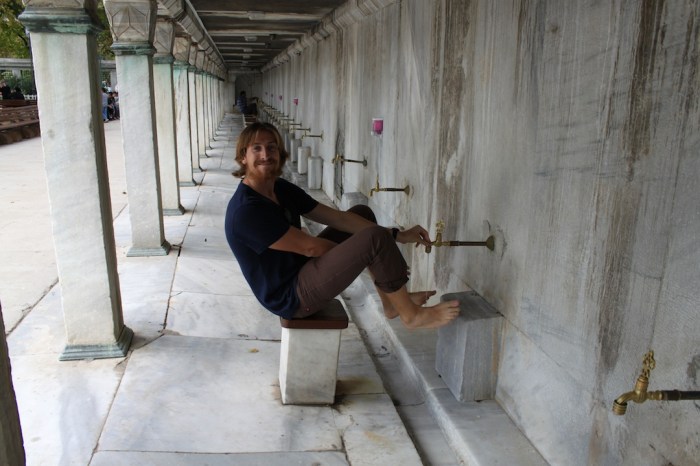
Gotta go barefoot in the Blue Mosque Washing off those feet outside the Blue Mosque
A little post-Blue Mosque çay

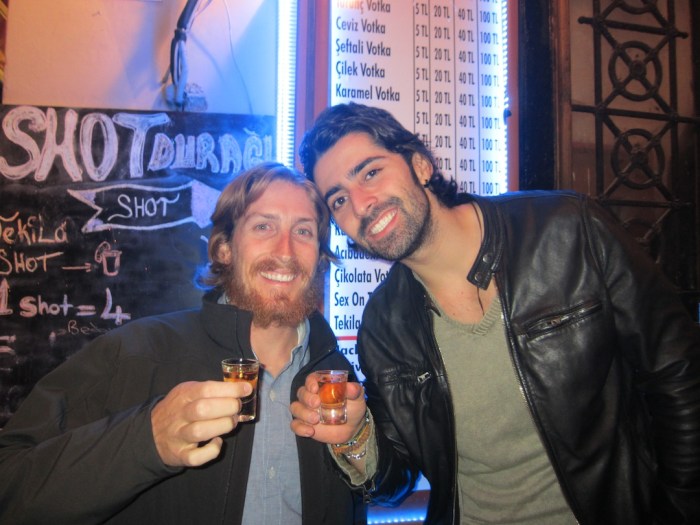
One of the highlights of our time in Istanbul was a night out with some local lads.  Our friend (and future Thailand travel companion) Hillary introduced us via email to her good friend Fer, who is back in his home city of Istanbul after living in Los Angeles for seven years (four of them at USC).  We met Fer for lunch and made plans to meet at “The Studio” later that night.  Uh-oh.  Was this Istanbul’s hottest nightclub?  Anna and I were a little worried because we left our clubbing outfits at home…in 2002.  We showered up, motivated ourselves and headed back out to meet Fer.  He met us at a street corner, walked us down a dark alley and…wow…awesome!  “The Studio” was an actual music recording studio.  It turns out that Fer is a ripping drummer and plays in the band for a singer that just won a best new artist award in Turkey.  For the next few hours, Anna and I and a few others watched Fer and his buddies have an all out jam session.  We even got to see the world premier of their new music video that’s scheduled to air on MTV in Turkey soon.  Afterwards we all headed out to a group of bars that were overflowing with young Turks and good music.  Anna and I were pretty proud of ourselves that we made it until 3:30am before having to call it quits.  It was a great night…all of Fer’s friends, like all Turkish people, were super friendly and welcoming, and it was a side of Istanbul we would not have seen otherwise.  We made plans to meet up for a traditional Turkish Sunday brunch the next day, but unfortunately I left my Zack Morris-sized travel phone in our room and we couldn’t connect.  Next time.  Thanks for everything, Fer!

Can Bonomo on the ukelele Johnny and Fer

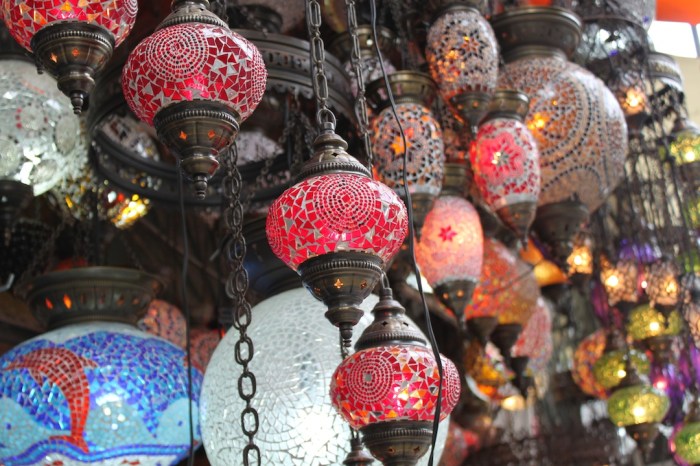
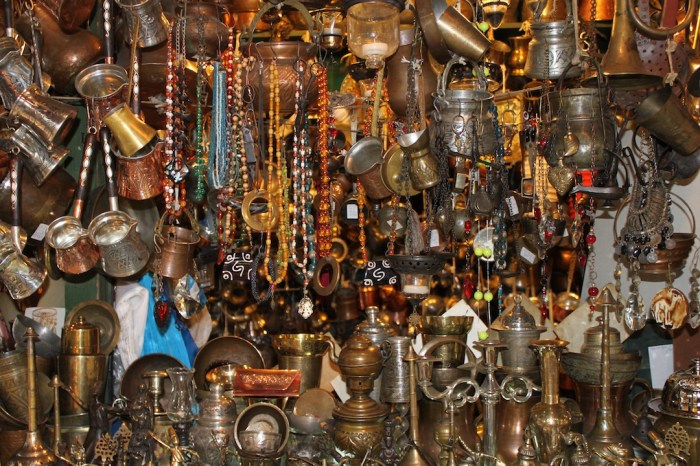
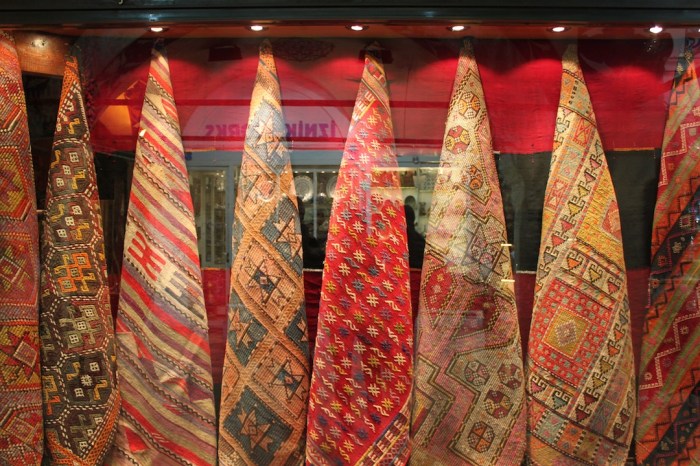
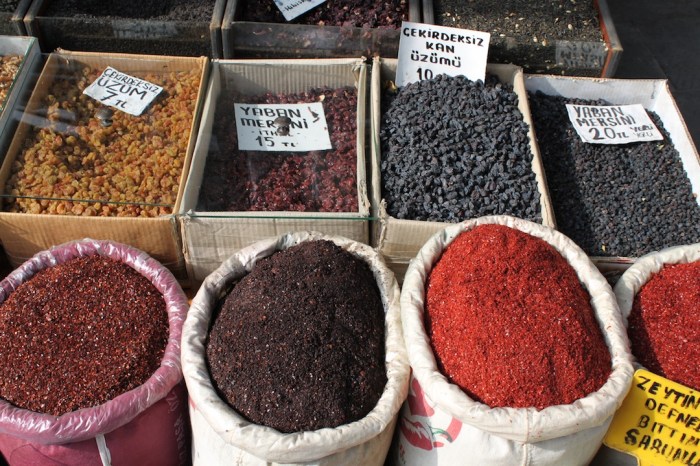
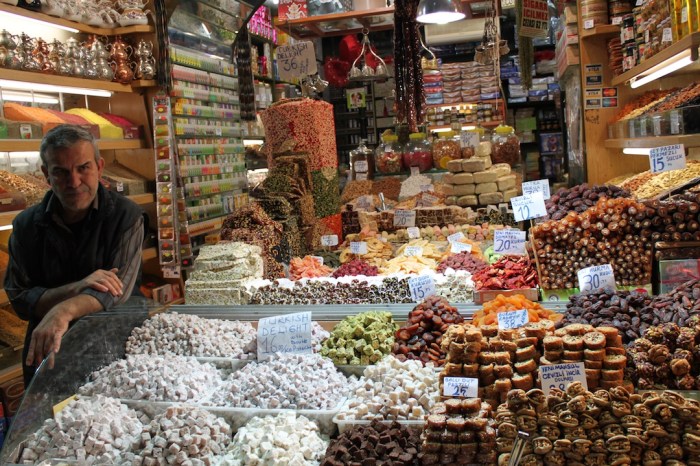
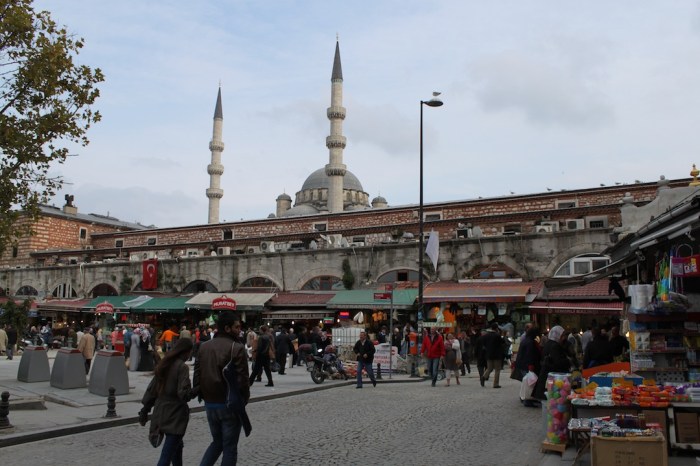
I had to mentally prepare myself for a visit to the Grand Bazaar.  I was picturing being shouted at and grabbed by millions of merchants trying to sell me fake carpets and knock-off watches.  I thought, “Let’s get in, take some pictures and get out.”  Turns out, the Grand Bazaar was actually pretty awesome.  It’s a labyrinth of unique walkways with over 2,000 tiny boutiques and workshops selling everything you can think of, but it wasn’t as chaotic as I thought.  In addition to the shops, there are tea houses, cafes and even a mosque, all covered in a beautiful building.  Anna loved it and could have gone back every day.  However, one thing’s for sure, I am terrible at the art of bargaining.  Anna bought some bracelets and got the guy down from TL40 to TL25.  Nice!  I saw a cool shirt I liked that was priced at TL25, so I asked the guy if he could do it for TL20.  I ended up giving him TL50 and my pants, and Anna and I now have to name our first son Mehmet.  We also visited the Spice Bazaar, a marketplace that sells all sorts of spices, dried fruits, nuts, Turkish Delight and other goodies.  Sensory overload.

Lanterns in the Grand Bazaar Jewelry in the Grand Bazaar
Trinkets in the Grand Bazaar Carpets in the Grand Bazaar
Spice Bazaar Spice Bazaar
Spice Bazaar Outside the Spice Bazaar

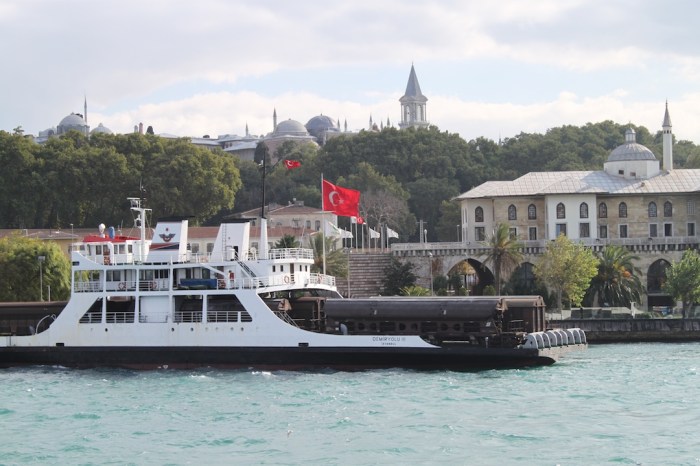
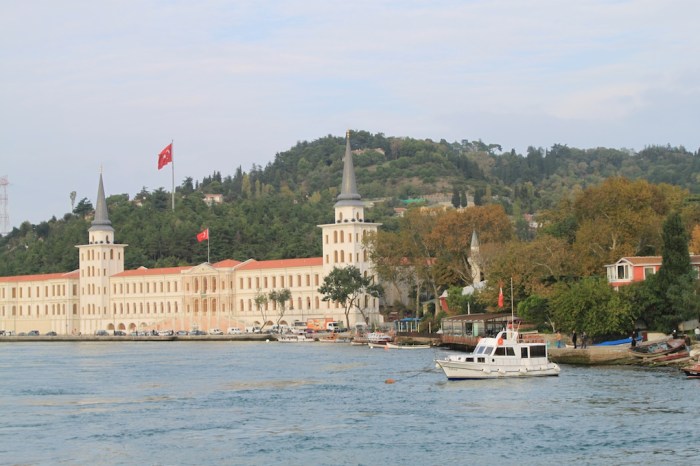
With visits to the main tourist sights and markets checked off our list, we explored as many of Istanbul’s different neighborhoods as we could, by both land and sea.  One day we took the public ferry to Kadiköy, which is on the Asian side of Istanbul.  It had a happening food market, and we sampled some awesome mezes at Ciya Sofrasi, one of Istanbul’s best rated restaurants.  We also explored the Beyoglu neighborhood a couple different times, and each time it was absolutely packed.  The main street, Istiklal Caddesi, was a sea of people every time we saw it.  Come to think of it, nearly every area of the city we went was packed with locals…Istanbul is crazy!  Anyways, Beyoglu was the seedy part of town back in the ‘90s but is now home to hip new boutique stores, galleries and restaurants.  Another day we took a cruise of the Bosphorus and got to see all the different sights and neighborhoods that dot the coast.  The Istanbul skyline from the water, especially when Aya Sofia, Topkapi Palace and the Blue Mosque are all visible at the same time, is pretty amazing.  Istanbul is such a big, historic, vibrant place with tons to see and do, and we could have easily spent a few more days there.

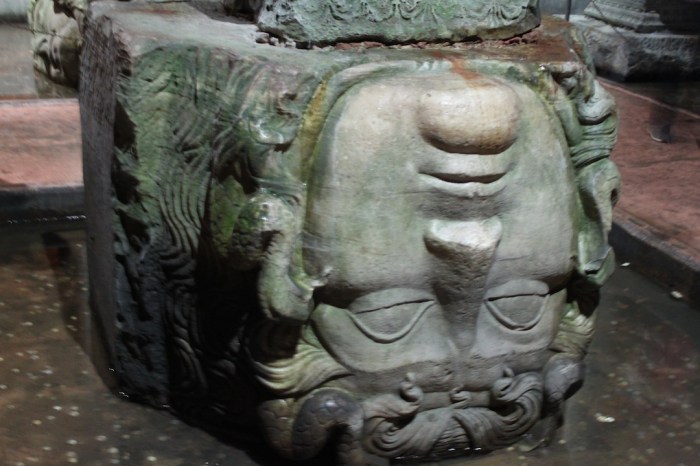
The Basilica Cistern stored water for the palace Upside down Medusa head at Basilica Cistern
View of Topkapi Palace from the ferry
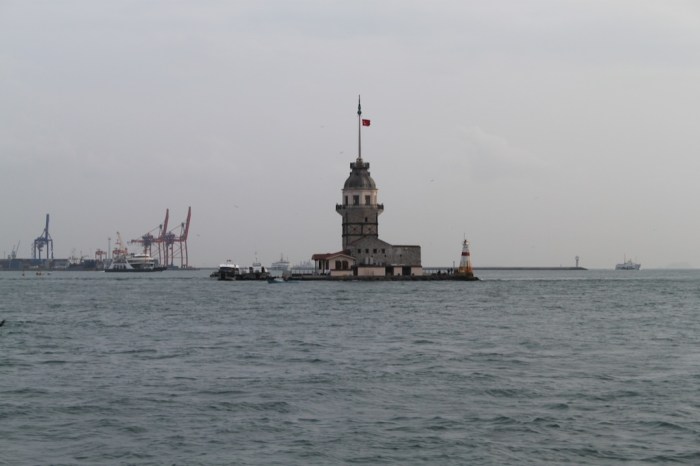
Kiz Kulesi island and tower from our cruise Scenes from the Bosphorus cruise
Cruising the Bosphorus Istanbul’s skyline from the Bosphorus
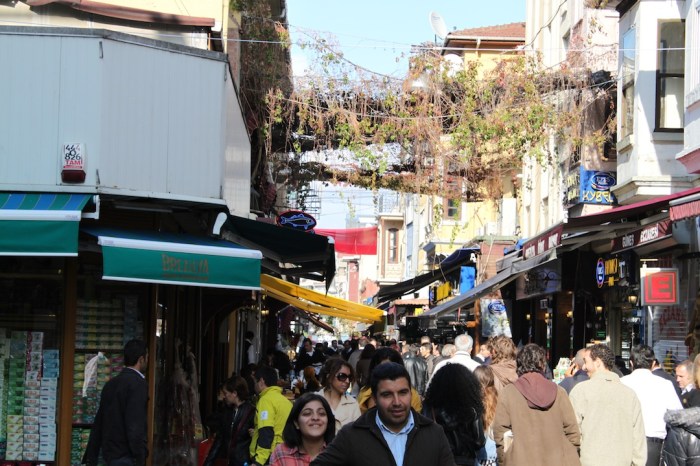
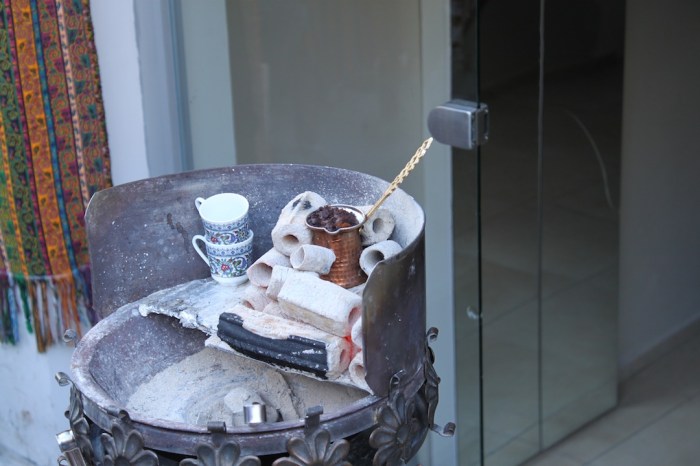
Bustling street in Kadiköy Traditional Turkish coffee in Kadiköy
Sea of people on Istiklal Caddesi
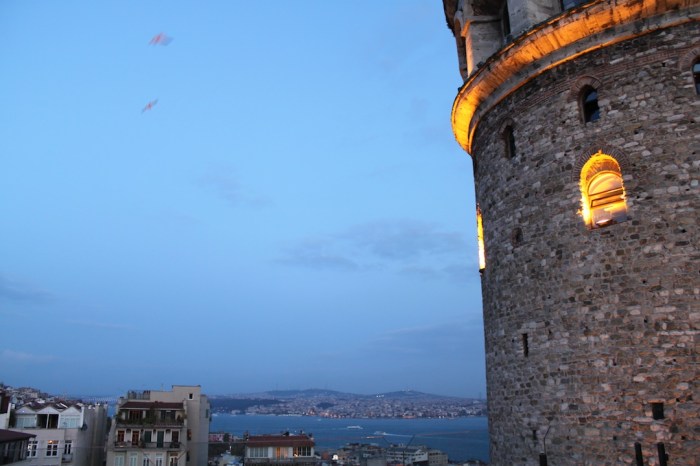
View of the Galata Tower at night We had wine near the Galata Tower at sunset
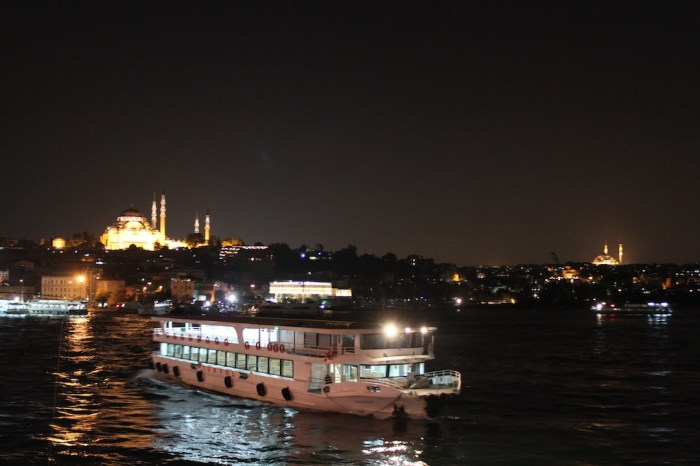
Walking across the Galata Bridge at night

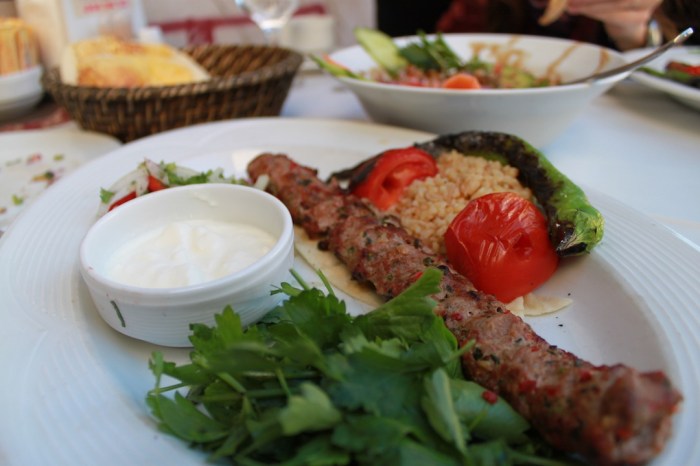
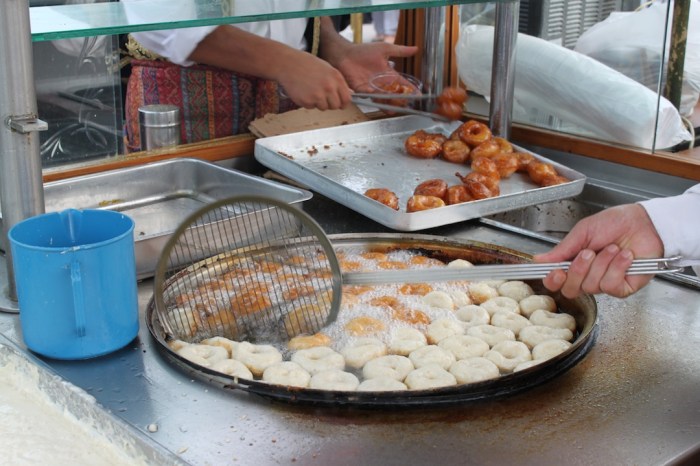
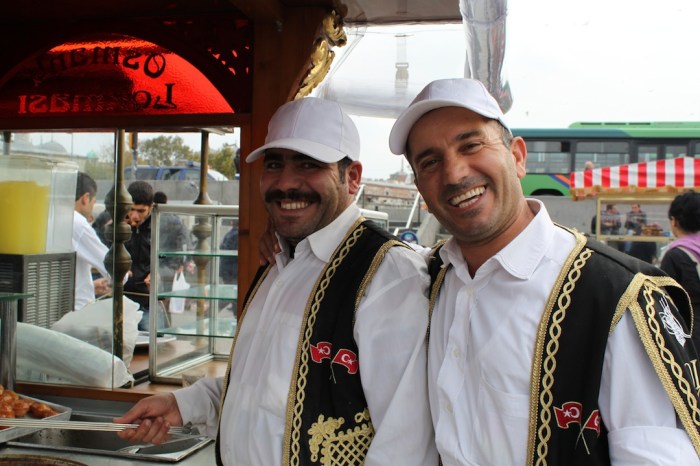
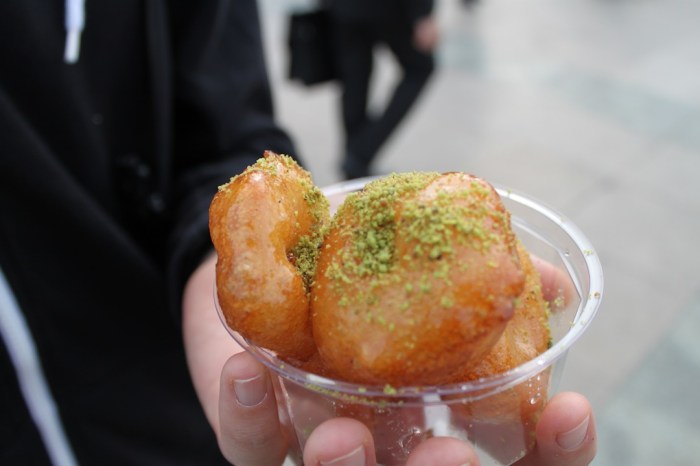
Oh yea, and we (meaning me) ate a ton.  I couldn’t get enough of the food in Turkey.  Anna already mentioned our recent addiction to çay, and I loved me some Turkish coffee as well (Warning: When tasting Turkish coffee for the first time, you may want to wear a diaper). The spices, the veggies (eggplant!), the mezes, the bread…we loved it all.  Check out some pics, including an epic fried dough ball sequence, below.

“Spoon salad” with walnuts, tomatoes and pomegranate All kebab all the time
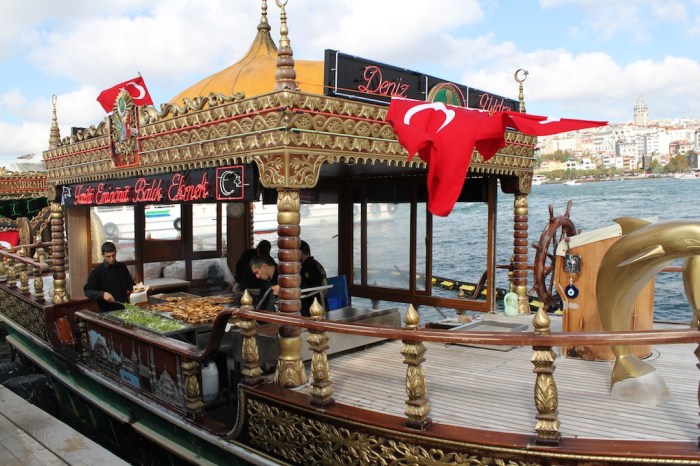
Fish sandwiches grilled up right on the boat Fish sandwiches are an Istanbul institution
Fried dough ball in honey… …made by happy dudes…
…look and taste delicious… …and make Johnny a happy dude, too
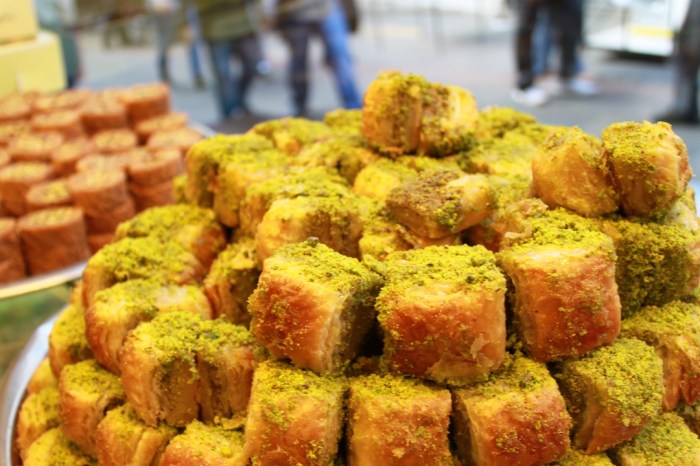
Döner kebab Best. Baklava. Ever.
October 25, 2011

Drip Castles and Fairy Chimneys

by Anna

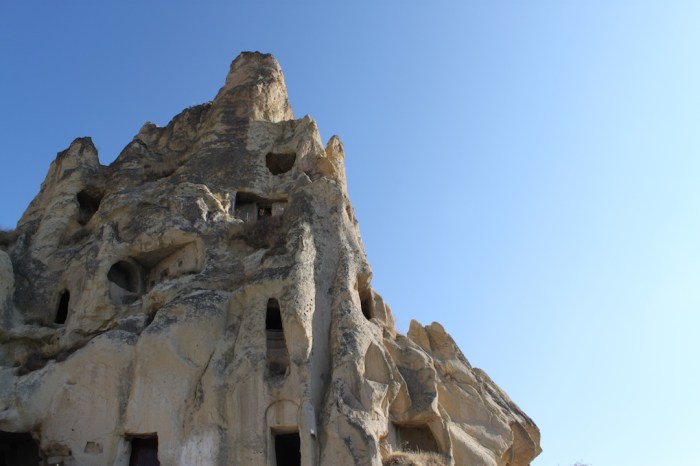
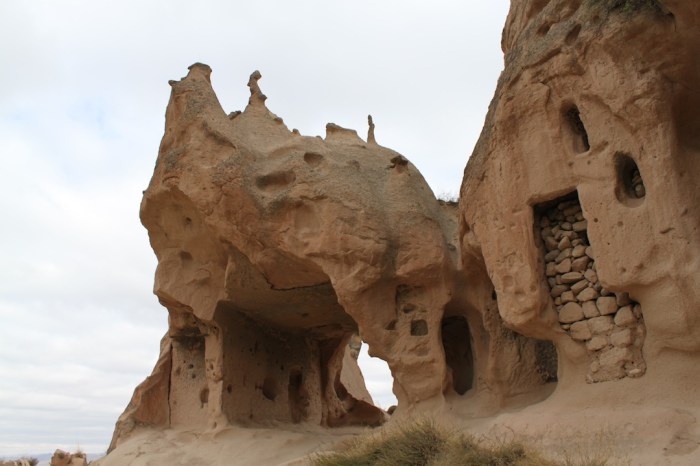
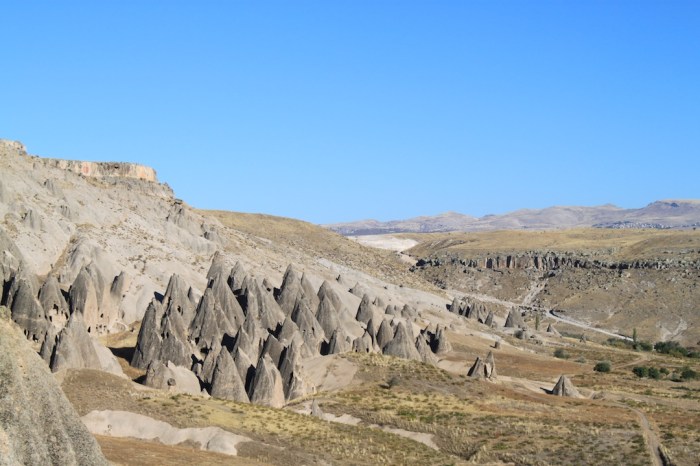
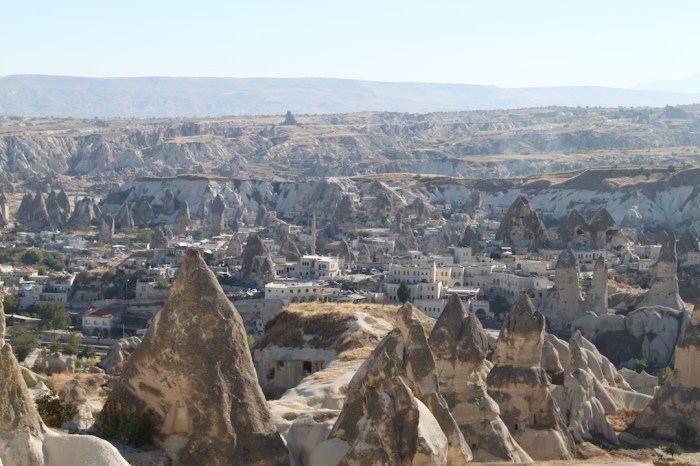
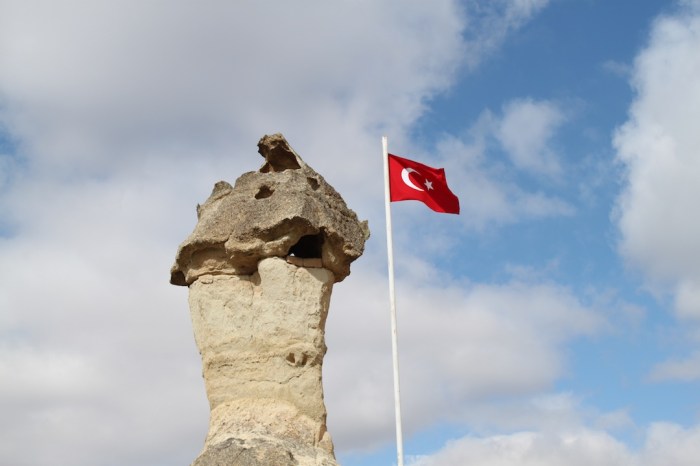
Cappadocia, “Land of the Beautiful Horses,” is unlike any place I’ve ever seen. Johnny and I were constantly in jaw-drop positions as we explored this other-wordly landscape, rich and unique both in its history and geology. Cappadocia’s terrain resulted from volcanic eruptions millions of years ago. Over time, the lava was eroded by weather, exposing the soft tuff left beneath the harder rocks above, thus leaving behind the phallic looking formations, dubbed “fairy chimneys” that stud the area. Also left behind were the amazing valleys and drip castle-esque rock formations that served as cave dwellings for prehistoric settlers, Byzantines, Christians, and so on as one civilization built upon the work of its predecessor through the ages.

We based ourselves in the cool little village of Göreme, which is a scenic delight in itself with cave houses dotting the rocks and lively shops and restaurants nestled along a tree-lined canal. Göreme also topped the charts with the friendliest, warmest people ever. We were already impressed by how nice and helpful Osman and his nephew were in Selçuk, and our amazing host, Mustafa, at the Arch Palace Hotel picked up right where they left off. He went out of his way to make sure we had dinner plans, rides to and from wherever we needed to go, maps of the valleys, etc. During breakfast each morning as we admired the view from the rooftop, Mustafa would move from table to table talking with all his guests and making sure everyone was happy. Every other person in Göreme was the exact same way, always making us feel welcome. By the time we left, we felt like we had friends all over the village, many of whom thought Johnny looked either like Jesus or Jake Gyllenhaal. It was a toss up.
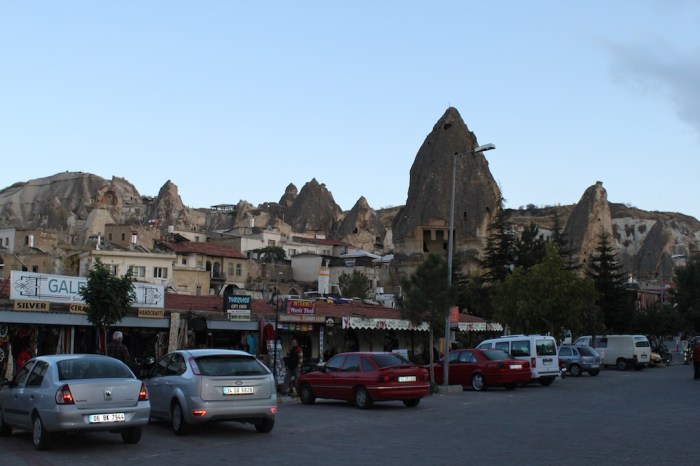
Cave houses just off the main road in Göreme
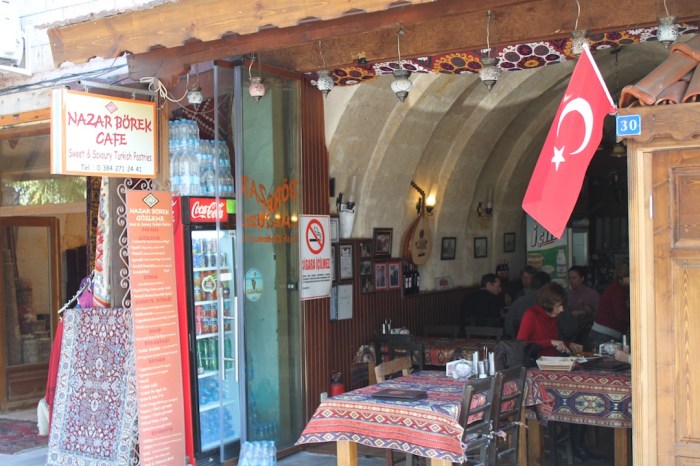
A delicious Börek meat filled pastry at Nazar Börek Cafe Nazar Börek Cafe in Göreme
Along the canal in Göreme

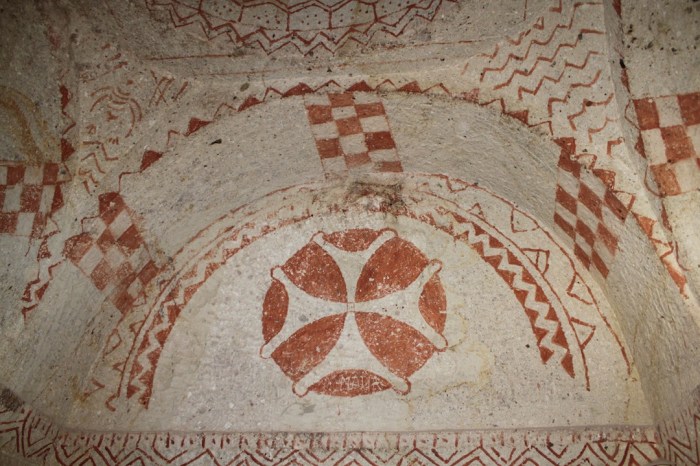
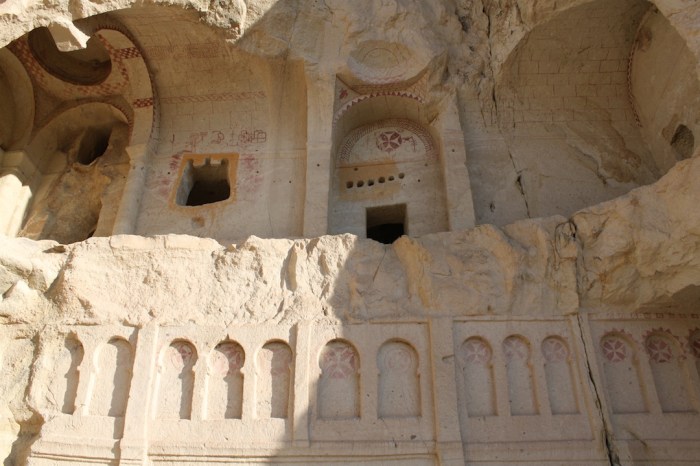
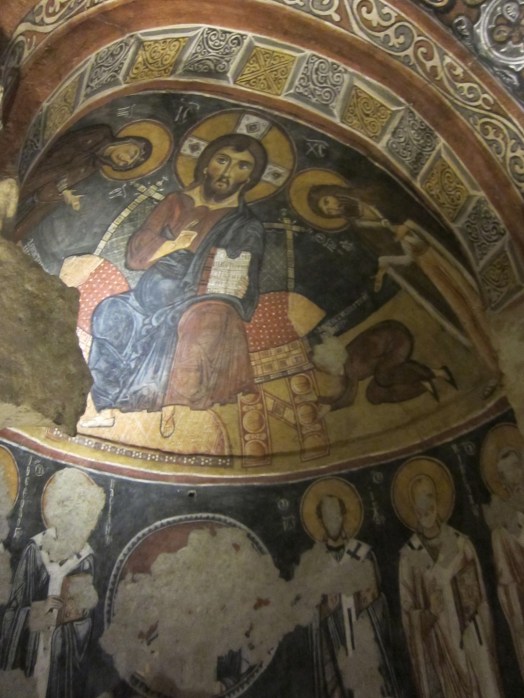
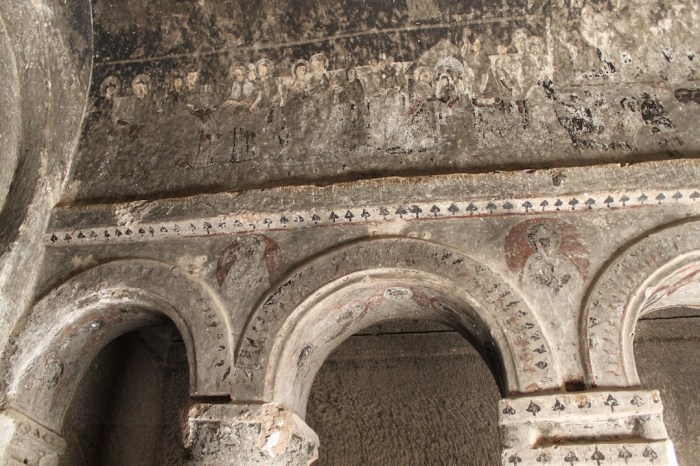
As soon as we arrived in Göreme, we bundled up since it was pretty frigid, and walked a small distance out of town to the Open Air Museum. This was our first opportunity to explore the cave dwellings and churches that date back to the Byzantine period and to take in the amazing landscape around us. We particularly enjoyed visiting the Karanlik Kilise, or “Dark Church,” which had the most beautifully preserved frescoes due to the lack of light over the centuries.
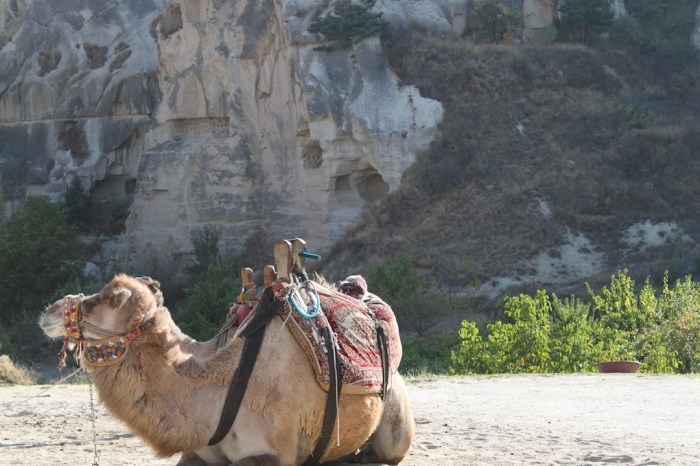
The view from our walk to the Göreme Open Air Museum, a Unesco World Heritage Site
 
Just passing a camel along the way…no big deal Rocks speckled with cave houses
Other-worldly
Doorway to a cave house Cave paintings
Karanlik Kilise Beautifully preserved cave frescoes
Inside the Open Air Museum

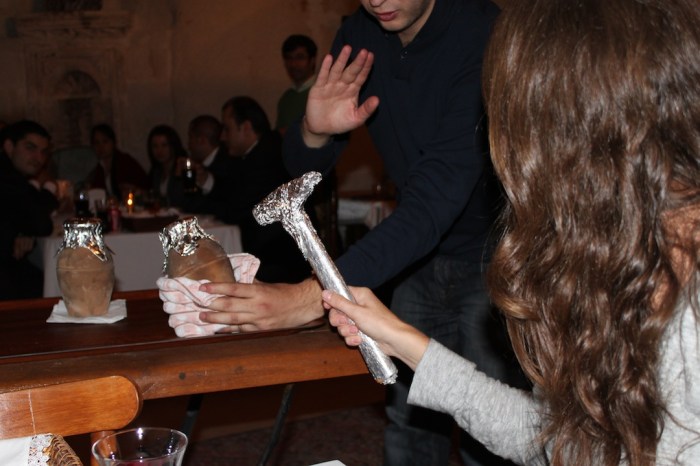
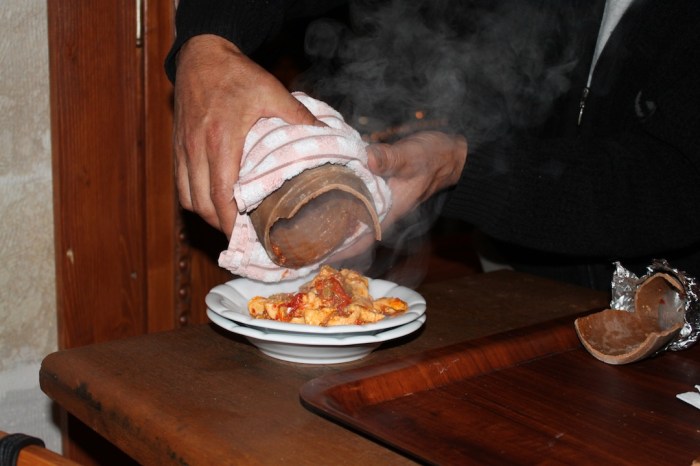
That night after enjoying the sunset from the roof terrace of our hotel, we sampled our first Testi kebap. Testi kebap, you say? At first glance this might sound like a dish involving the unmentionables of some animal, but quite to the contrary. It is actually a delicious mix of meat and vegetables cooked in a sealed clay pot over an open fire. The best part, besides being crock-pot style, melt-in-your-mouth delicious, is that you get to break open your clay pot with a hammer at the table (pretty sure I ate a few pieces of clay, but it was worth it!).

Up on the roof…
Easy does it Bam! steaming goodness is revealed
Yum

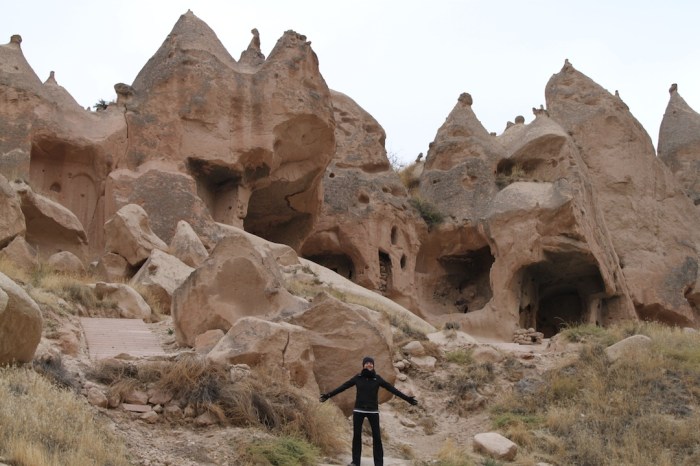
The next day we again put on our warmest layers and took a short bus ride to another Open Air Museum in Zelve. The three valleys which make up the museum blew us away with their colorfully streaked rock walls, crazy rock formations and multitude of cave dwellings and pigeon houses dating back to the 9th century and lived in up until 1952 when they were deemed too dangerous for villagers. Unlike the Göreme Open Air Museum, we were two of only a handful of people there, so it felt like we had these amazing canyons to ourselves.

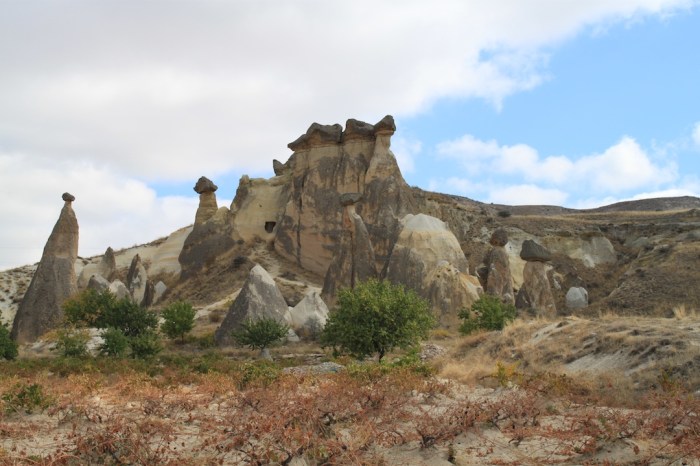
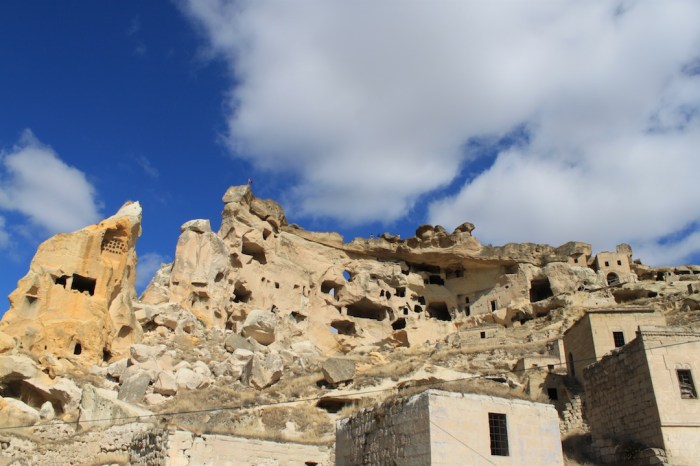
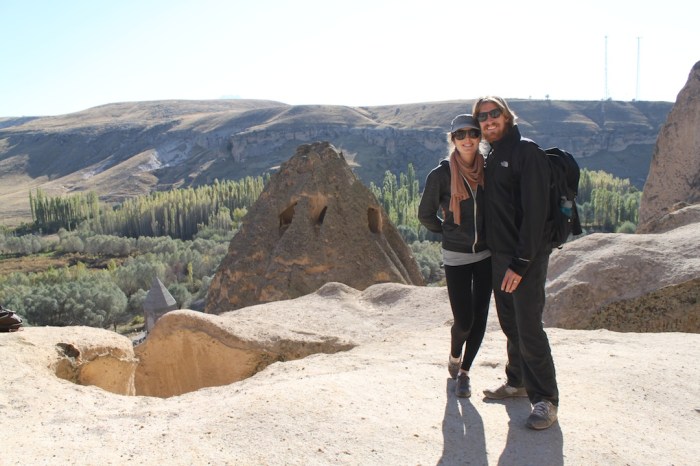
From Zelve we veered along dirt paths past grapevines and sheep till we found Paşabağı, well known for its stunning array of fairy chimneys, some of which contained former monk cave dwellings and chapels. Our walk then took us to a small village called Çavuşin. We stopped at “Ayse & Mustafa’s Place” in the old part of the village for some çay (by this point I was developing a mild addiction to Turkish tea) and lunch. Çavuşin had an incredible, massive rock face filled with abandoned cave houses, and we got amazing views after scaling up the side of it.
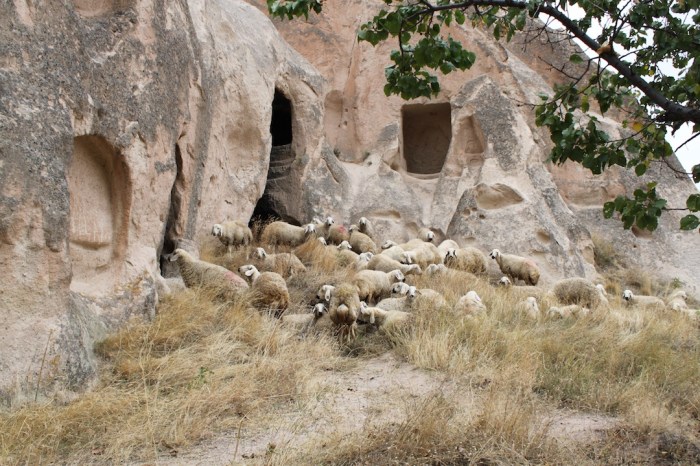
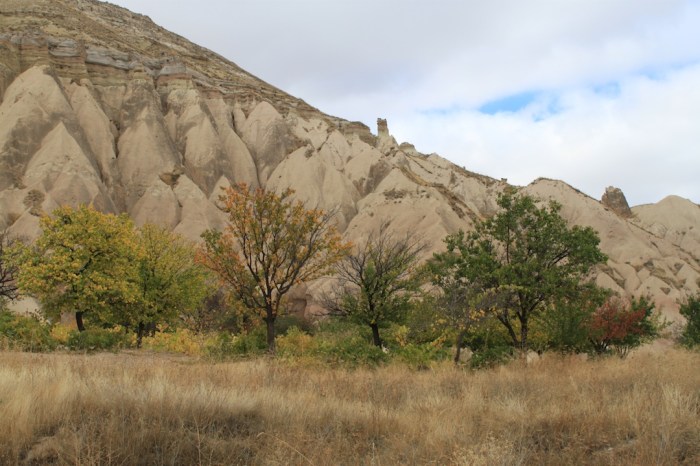
It was just us and the sheep Autumn colors in the valley
The fairy chimneys also kind of look like mushrooms
More fairy chimneys
Cay in traditional tulip glasses Refueling at Ayse & Mustafa’s Place
Çavuşin cave houses
Climbing the rock face in Çavuşin…”Where’s Johnny?”

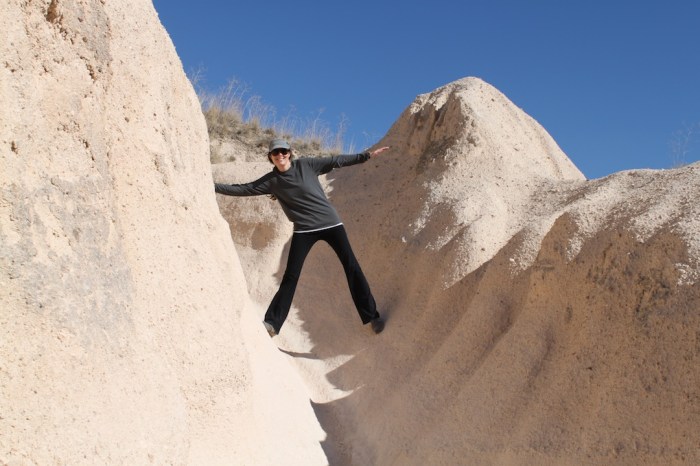
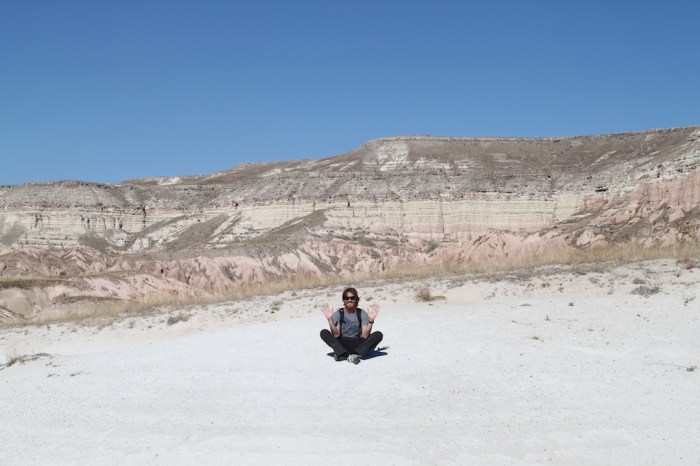
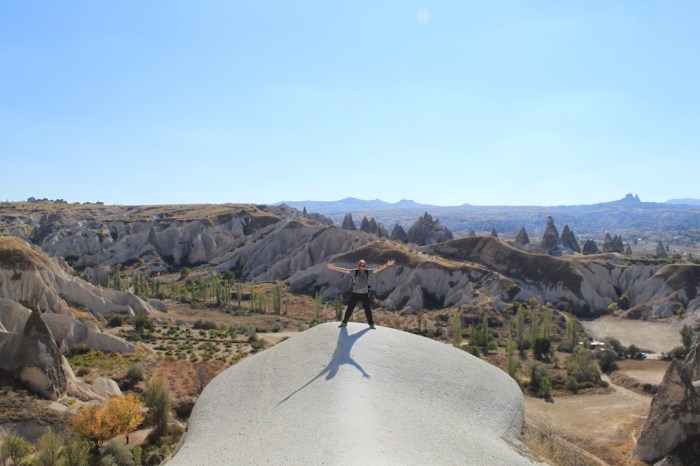
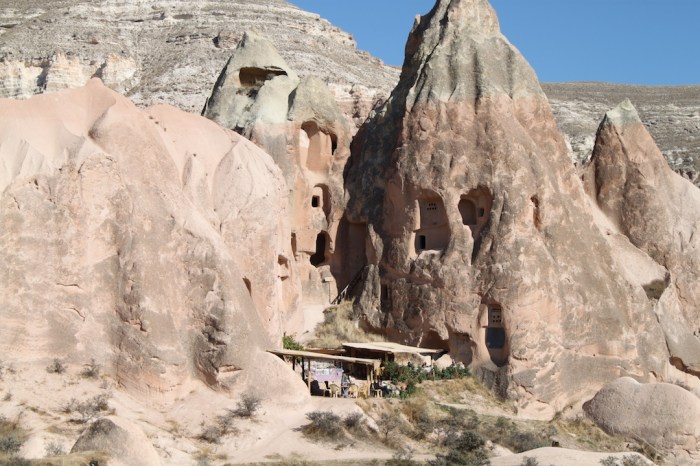
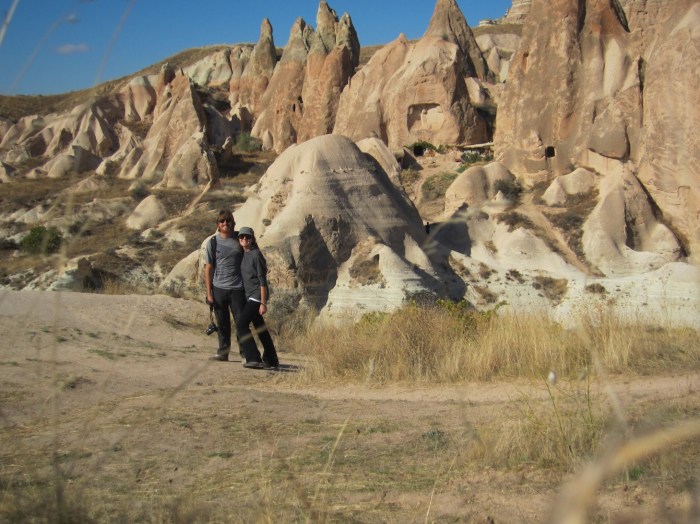
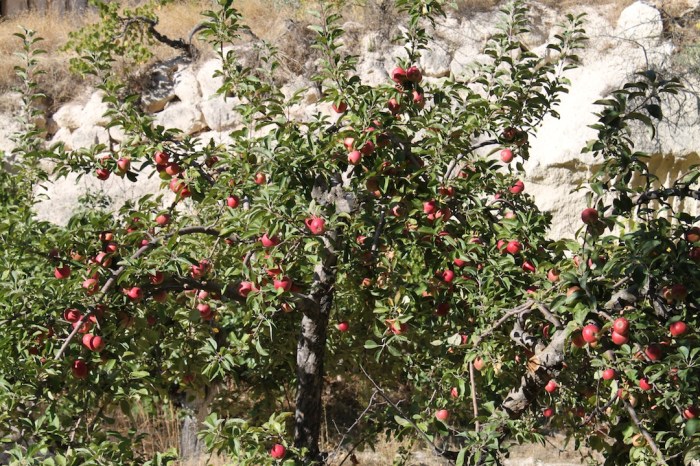
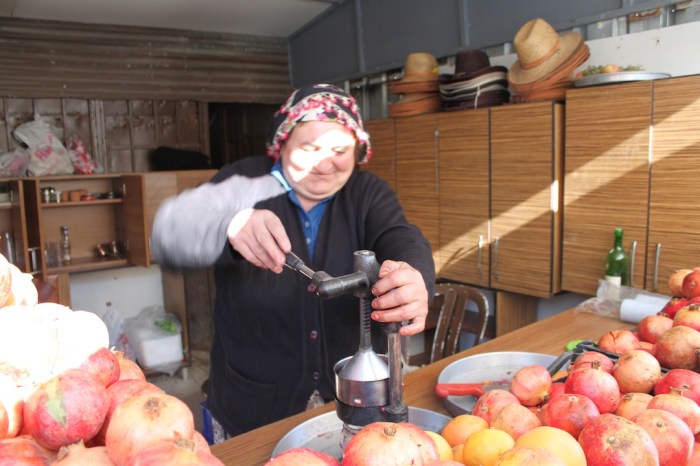
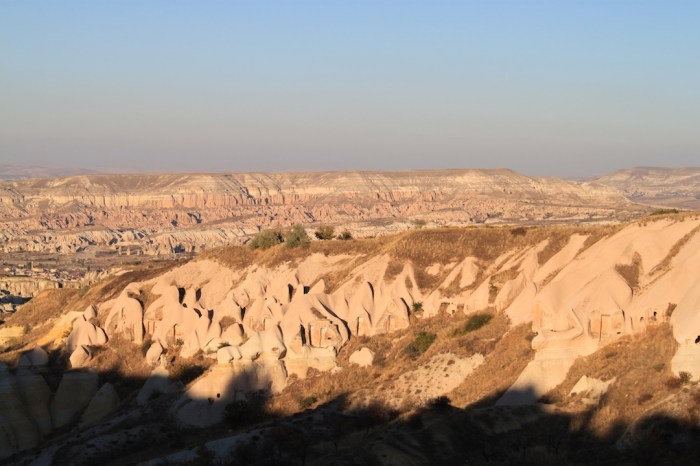
Next we headed to what would be the highlight of the day; the Red and Rose Valleys. We had heard that you sort of just “find your way” through these valleys, as they are not really marked, and the trails veer off in all directions. The lack of detailed maps or trail markers and the lack of people definitely made for a surreal adventure exploring these pink and rusty-hued valleys. Every twist and turn took us to an even more spectacular view than the last with shapes and colors that we had never seen before. And just when we felt like we were the only people walking through what felt like another planet, we’d stumble upon cave houses carved high in the rocks, a random tea shack or old man gathering pomegranates and pumpkins. Pomegranate trees, by the way, were everywhere, and on our way out of the Red Valley, we stopped at a small tea stand and had a fresh squeezed cup of pomegranate juice. When we finally cut through the hills on our way back to Göreme, in awe of the natural wonders we had seen that day, the call to prayer echoed across the valley from the spires of the mosques, reminding us how very far away from home we were.

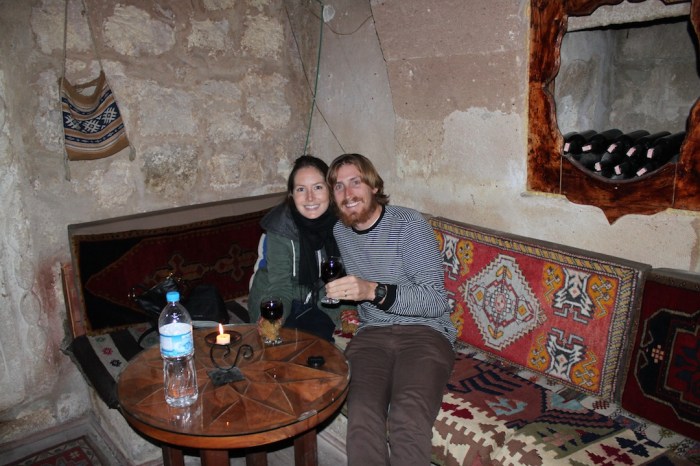
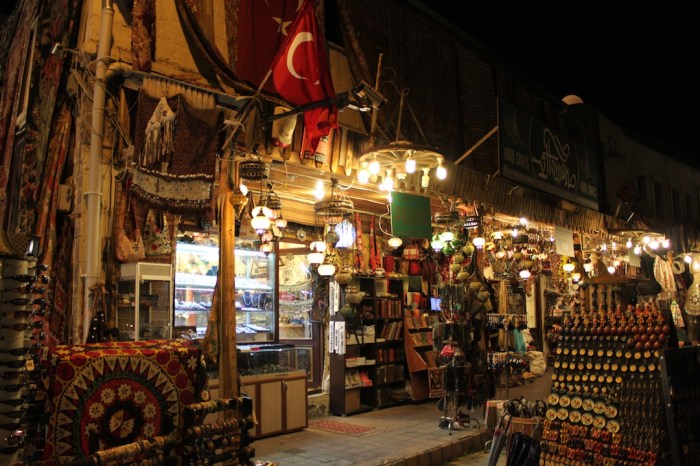
That night we perused the small colorful shops in Göreme (and really started thinking about buying one of those magical Turkish carpets!) and unwound/dethawed at the cozy Red Red Wine Bar.
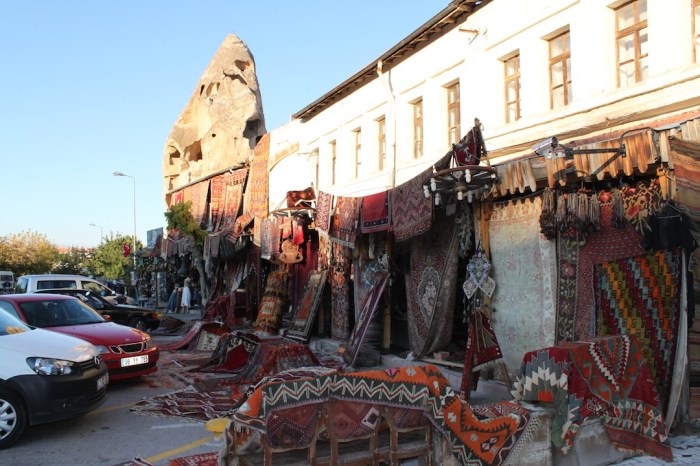
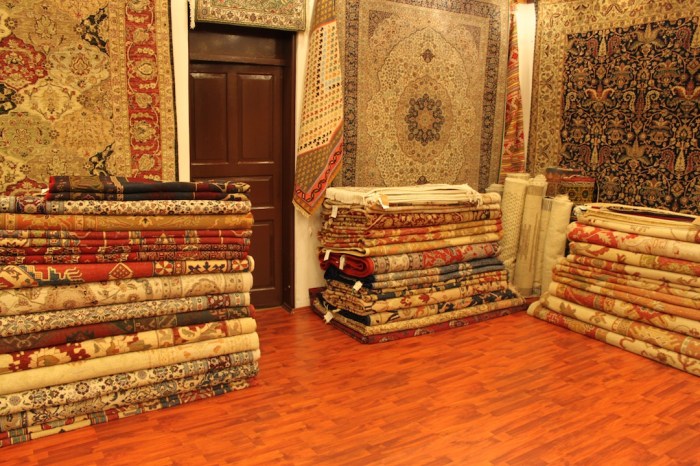
Carpets for days in Göreme
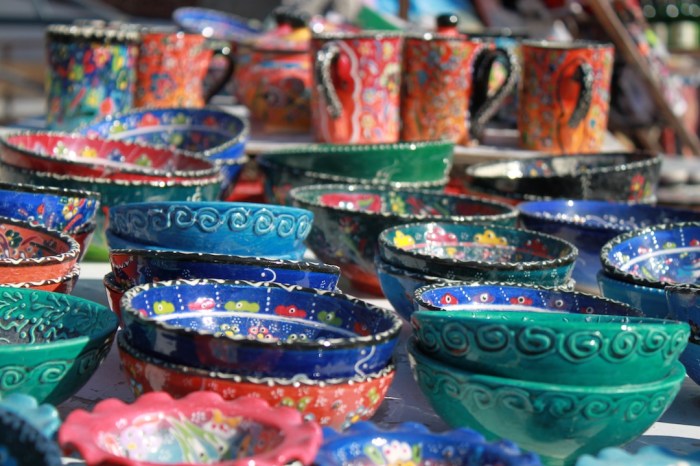
Bright hand-painted ceramics More carpets
Red Red Wine Bar Red Red Wine Bar
Nighttime in Göreme

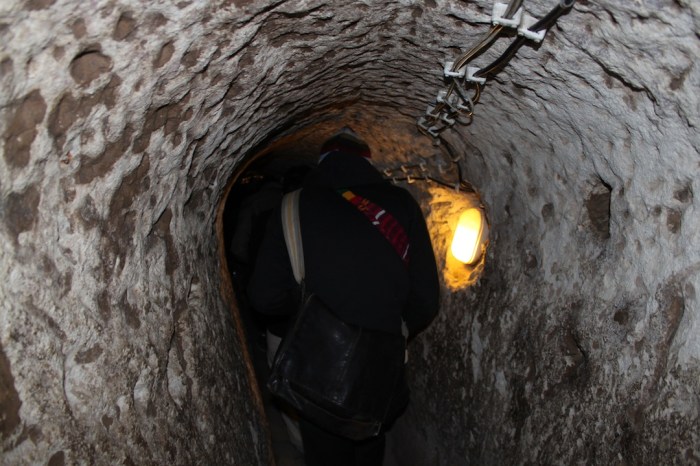
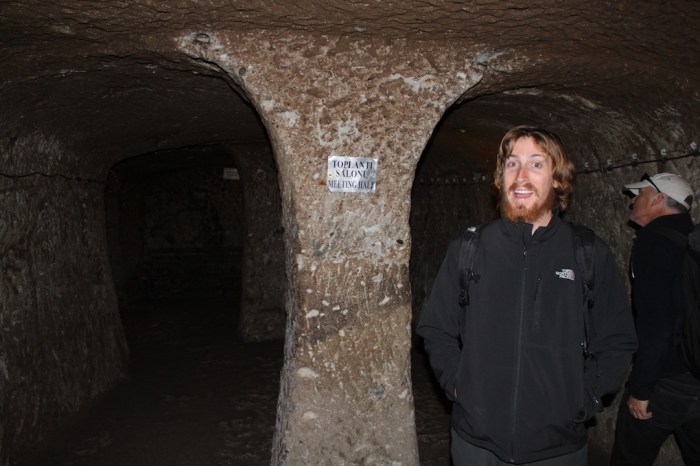
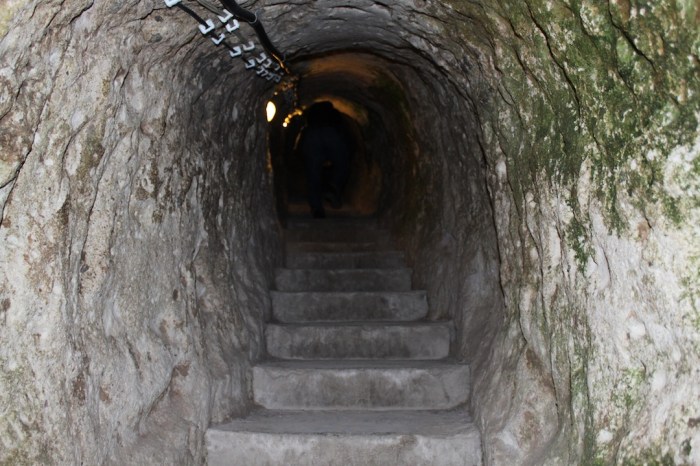
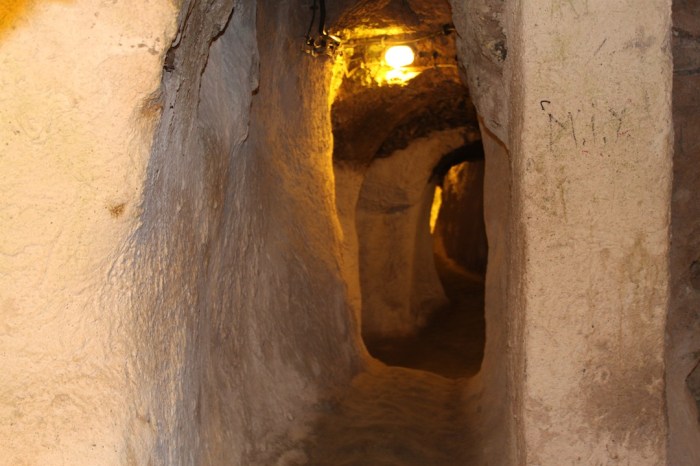
The next morning we awoke to sunshine and hot air balloons floating through the blue skies. We decided for our last day to join a small tour, called the “Green Tour” in order to see more of the region. After checking out a panoramic point of Göreme, our first stop took us to the Derinkuyu Underground City. The deepest of 36 underground cities discovered in Cappadocia, it was first built by the Phrygians in the 8th to 7th centuries BC and was expanded upon and served as a hideout for Christians in the 6th and 7th centuries. We were able to visit 8 of the 16 floors deep beneath the earth. When we arrived down the extremely narrow and low passageway to the 8th floor, we were 85 meters below the surface (approximately an entire football field length beneath the ground!). I think Johnny turned a little green at a couple points when we had to literally bend over and almost crawl to get through the narrow tunnels, but it was well worth it. The intricacy of the city with stables, homes, churches, wells, baptism pools, air shafts and classrooms was amazing, and it was crazy to imagine 10,000 people living for months at a time in this way in order to evade enemies.

Hot air balloon rides are a hot ticket in Cappadocia
The passageways got even more narrow and low than this…not a happy place for claustrophobics!
Johnny’s so excited to be eight levels below the earth Deep and narrow stairwells
One tunnel went a distance of 15km, connecting to yet another underground city

Glad to have avoided any cave-ins, we emerged back into daylight and headed for Ihlara Valley, the 2nd largest canyon after the Grand Canyon (fun fact). We took a 4km walk through the valley in the Melendiz river canyon which was full of fall colors, more cave dwellings and churches, and some of the most enormous ducks I’ve ever seen – I think they might have been duck-geese hybrids.

Ihlara Valley Agacalti (under the tree) church in Ihlara
The colors were beautiful in the Melendiz river canyon
Cappadocia was also the land of cute puppies Cave dwellings along the walls of the canyon

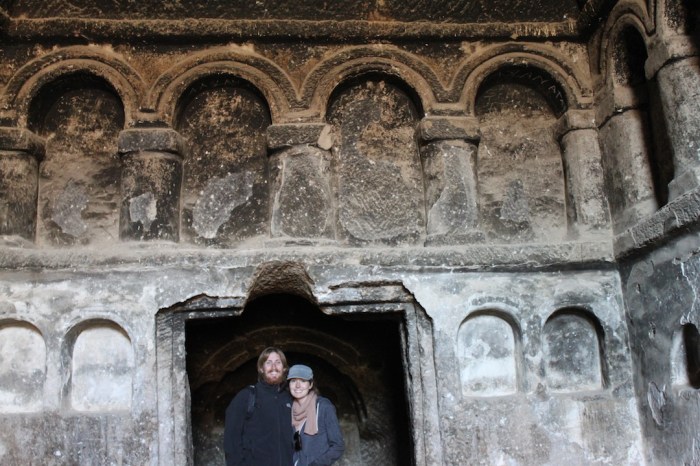
After lunch in Belisirma, we drove to Yaprakhisar, an area which is well known for its landscape looking like the backdrop of Star Wars. We climbed around and explored the largest monastery (Selime) in the area which was really impressive both in size and intricate details within the rock caves.
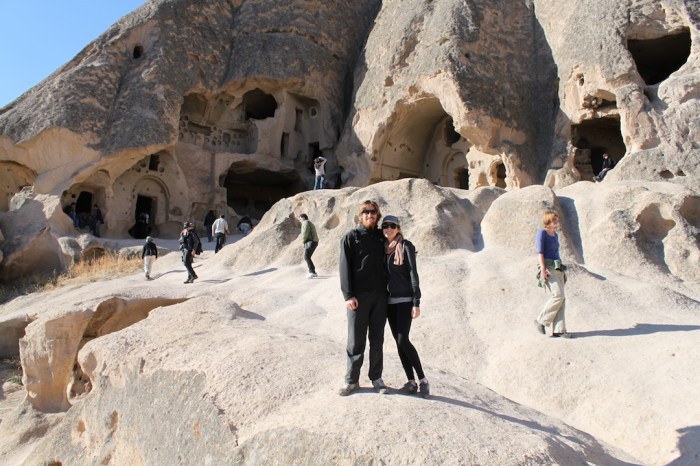
Yaprakhisar
Inside the church at Selime Inside the church at Selime
Star Wars landscape Yaprakhisar

After one final panoramic look out point of Pigeon Valley, we got back to Göreme around 5:30pm, grabbed our luggage and headed to the very cool Safak Cafe that we had found the day before for some last minute wine and meze before boarding our overnight bus to Istanbul!
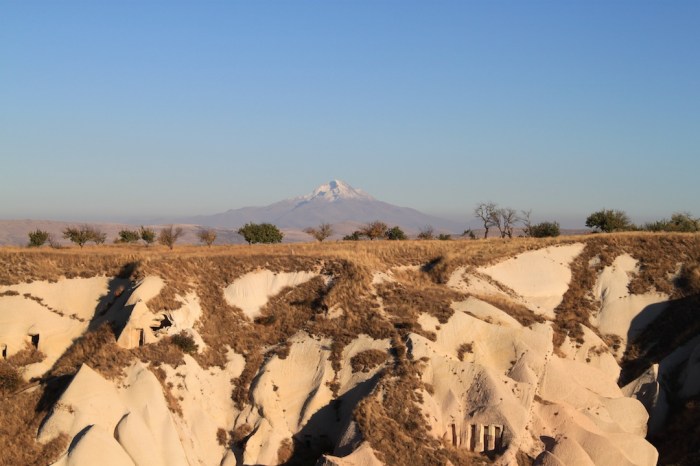
Erciyes Dagi volcano
Pigeon Valley (pigeons were considered sacred, and their droppings were used as manure)
We were sad to say goodbye to our main man Mustafa We loved the Arch Palace Hotel
October 23, 2011

Time For A Kebab

by Johnny

Do you know how hard it is for a meat-eating male to travel in Europe for nearly five months without eating a kebab?  It’s extremely hard.  They’re on nearly every street corner, tempting you with cheap awesomeness.  Did I give into this temptation?  No way.  I ignored these delicious hunks of meat on a stick with unrivaled willpower, determined to experience my first kebab in the world’s kebab mecca, Istanbul.

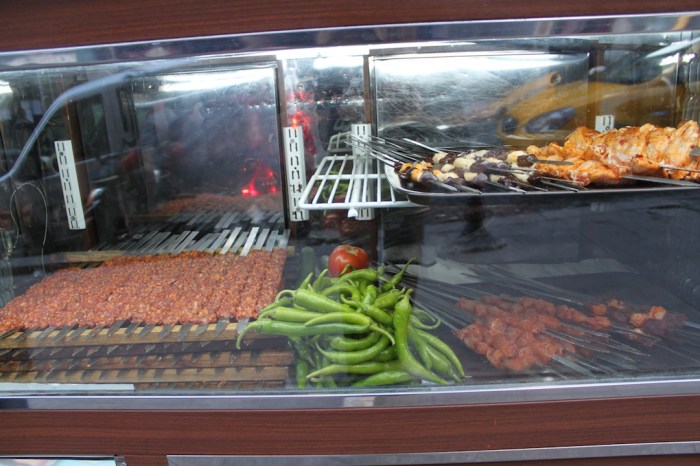
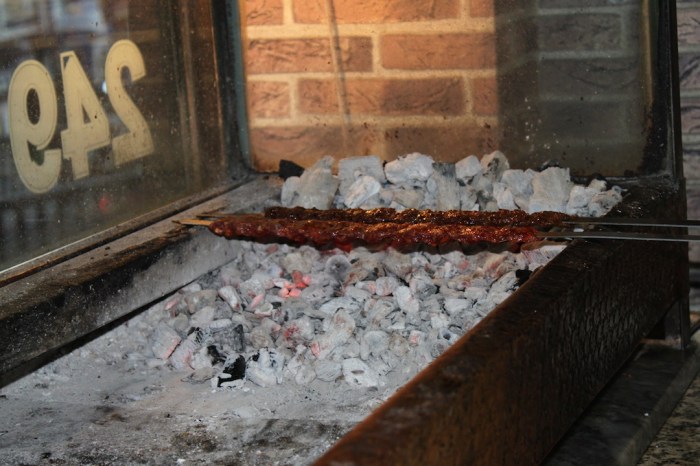
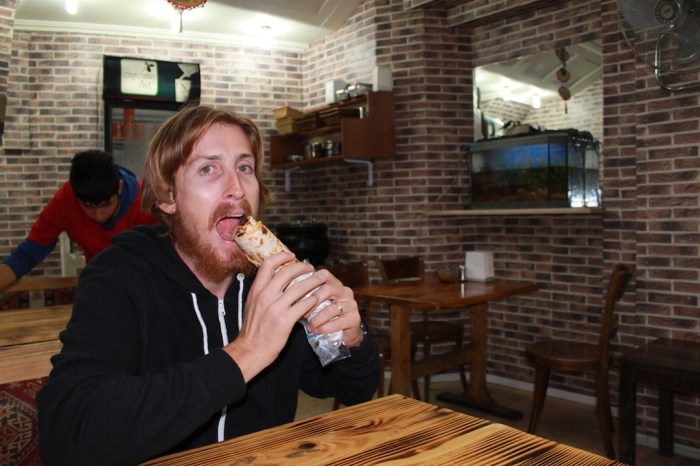
On one of our travel days a little while ago, Anna and I were watching the Istanbul episode of “Anthony Bordain: No Reservations.”  He raved about this hole in the wall kebab place that made both of us drool on our computer, and I thought, “Yes…this is where I will have my kebab!”  With some flimsy directions, we headed down a couple side streets, up a couple alleys, and finally made it to Durumzade.  Let me just say, it was worth the wait.  We ordered a spicy lamb durum (Turkish kebab wrap), which is the specialty of the house, and watched the grill master work his magic.  The best part was that he would periodically smother the cooking meat with the bread, soaking up all the juice and spices.  He wrapped the meat up burrito style with some tomatoes, onions and more spices and delivered it to our table.  I tore into this thing like a five year-old into his first present on Christmas morning.  It, like nearly every single thing we’ve eaten in Turkey, did not disappoint.

How can a place with smiley faces for U’s be bad? Choice of meats on skewers in the window
Cooking up our lamb on the grill All the fixin’s
One happy camper…who looks a little pooped from staying out ’til 4:00am the night before
October 19, 2011

Ephesus

by Johnny

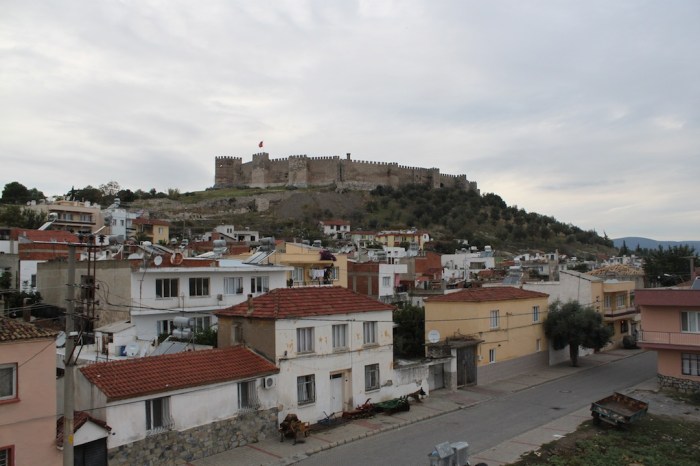
After over a month traveling throughout the amazing country of Italy, it was time for the Sherwood World Tour to move on. Next stop…Turkey! Our jolly B&B owner Osman picked us up at the Izmir airport in the freezing cold and drove us to the town of Selçuk, our base for exploring the ruins of Ephesus and surrounding sites. On the way to his comfy, family-run B&B, Nazar Hotel, Osman mentioned that his friend ran daily tours of Ephesus if we were interested. We haven’t been on many “tours,” but with only one full day to see the region (and because we didn’t want to get lost in the freezing cold), we figured it would be the best way to see everything. We’re definitely glad we did the tour as it provided us with a ton of insight not found in our guidebooks.

The view from breakfast at Nazar Hotel
View from our room We ate a delicious dinner in the freezing cold at Hotel Nazar
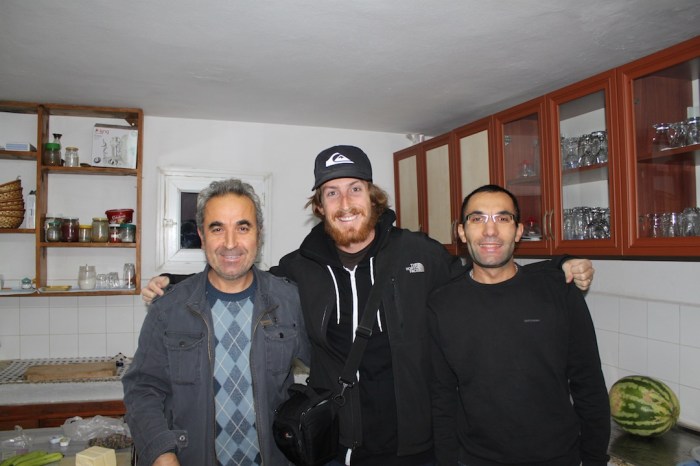
My new Turkish friends Osman and his nephew

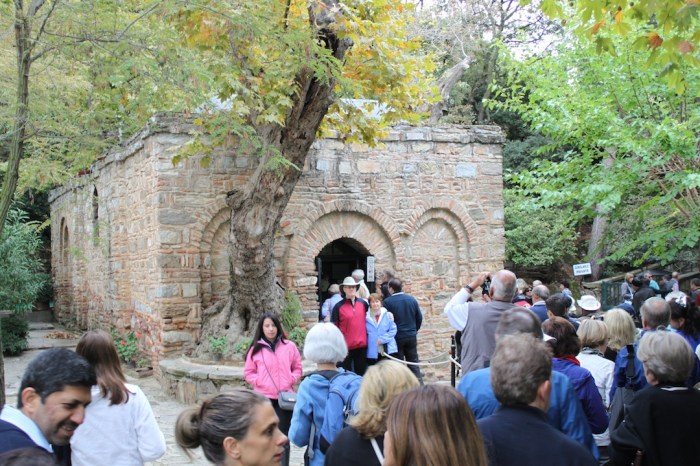
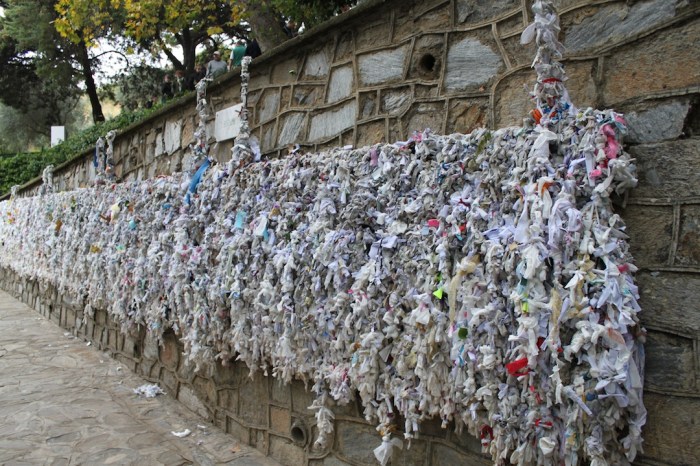
Our first stop was Meryemana (Mary’s House), where, as the story goes, the Virgin Mary lived her final years after she came to Ephesus with Saint John in the year 37 AD. Over 1,800 years later, a German nun named Catherine Emmerich had visions of Mary’s face in a grilled cheese sandwich she was eating. No, not really. But she did claim to have visions of Mary living in Ephesus, even though she had never visited the place or even left Germany. Using the descriptions of her visions as a guide, clergy from nearby Izmir discovered the foundations of an old house on a hillside near Ephesus. Whoa! Though the ruins have been dated to the 6th century AD, they are said to “contain some earlier elements, possibly from the 1st century.” Well, that was good enough for Pope Paul VI to unofficially claim its authenticity on a visit in 1967, making it a place of pilgrimage. Whether you believe the Virgin Mary lived there or not, it’s definitely an interesting place to check out.

Virgin Mary’s pad…allegedly
People lighting candles at Mary’s house Prayers written on tissues at Mary’s house

The next stop on our tour was Ephesus, said to be the best-preserved ruins in the Mediterranean, if not all of Europe. According to the legend, Androclus from Ionia, under constant attack from invaders, sought the advice of the oracle of Delphi for a new place to settle his people. The oracle told him to look for three things: the fish, the fire and the boar. When Androclus and his people arrived on the shores of present-day Turkey from Greece in the 10th century BC, they cooked some freshly caught fish, which started a large fire and scared a wild boar out of the bushes. Androclus hunted down the boar and founded Ephesus in the exact place he killed it.

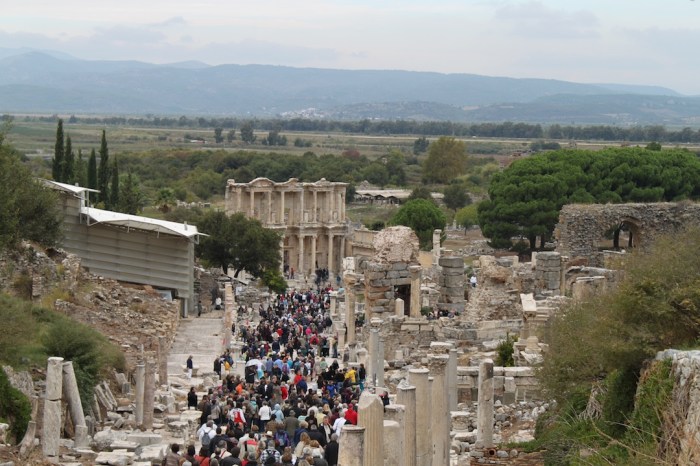
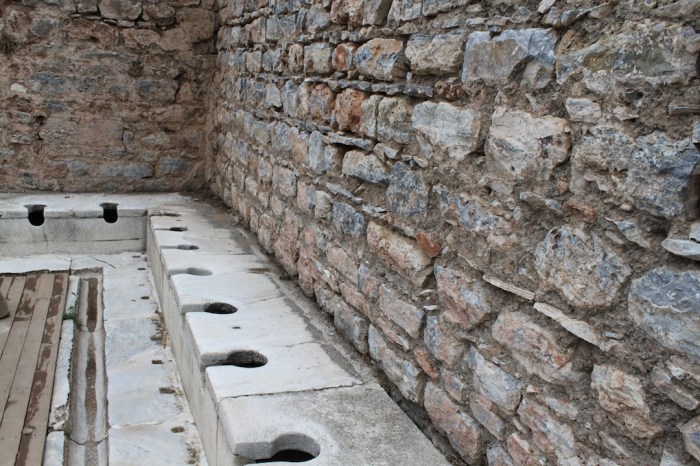
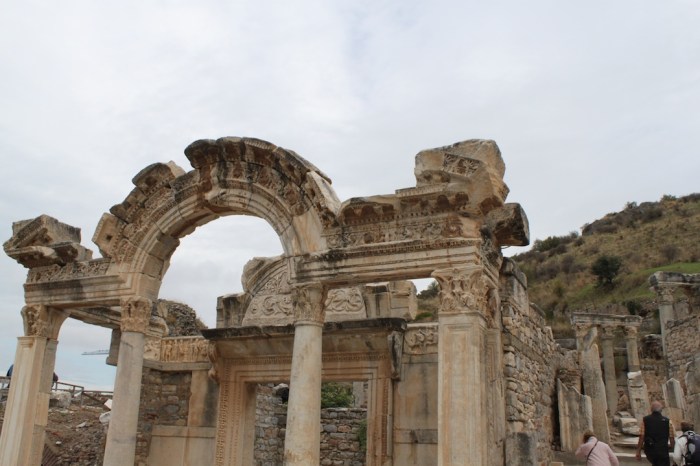
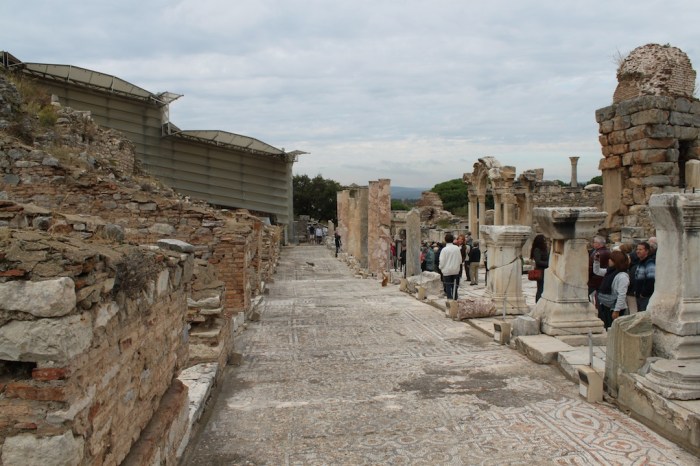
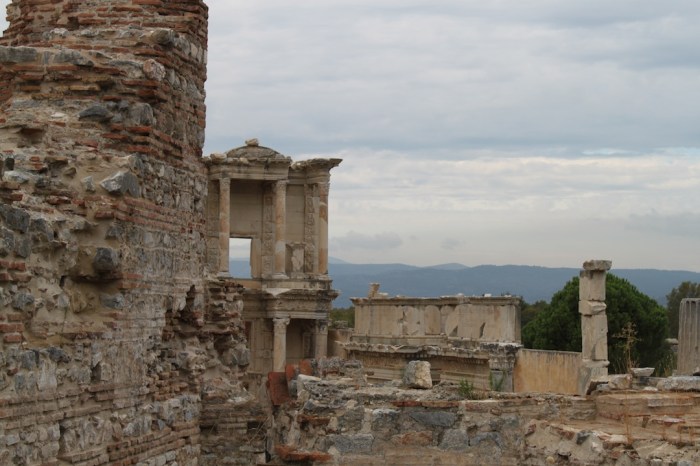
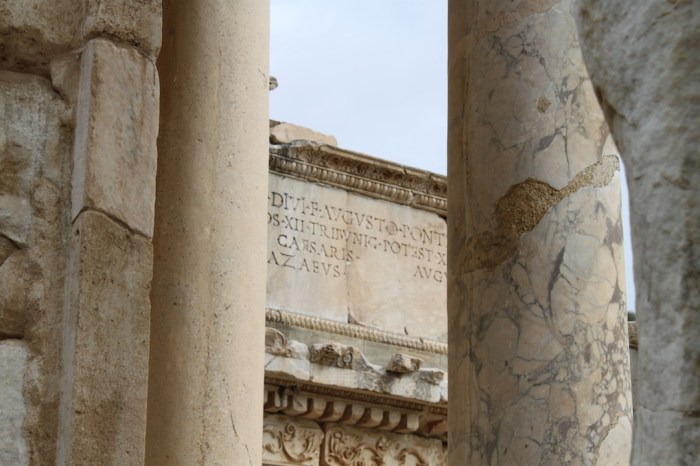
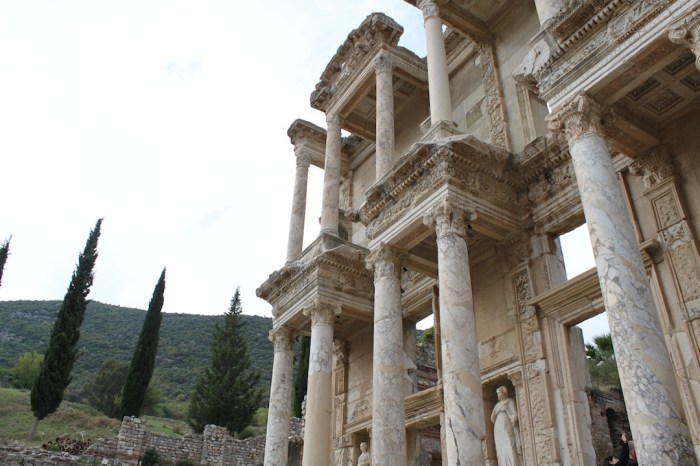
In the centuries that followed, Ephesus grew to become Rome’s capital in Asia Minor with a population near 250,000. Today, only 18% of the former city has been excavated, but it’s still enough to get your imagination running wild about how impressive a city it must have been back in the day. The city even had full running water (hot and cold) and sewage systems, and some statues clearly depict a round earth indicating that the Romans knew the world was round before that belief was lost during the Dark Ages. It was at Ephesus that we were definitely glad we had a guide. She told us the history of and meaning behind each set of ruins, which would have otherwise looked like a bunch of old stones to Anna and me. Some highlights were the Varius Baths (where visitors were required to clean themselves upon entry) the Trajan Fountain, the Temple of Hadrian, the men’s latrines (where many wealthy men had membership), the Curetus Way (the Fifth Avenue of Ephesus), and the Great Theater. Of course, the head honcho of all the Ephesus ruins is the Library of Celsus. In its day, it held 12,000 scrolls, making it the third largest library in the ancient world.

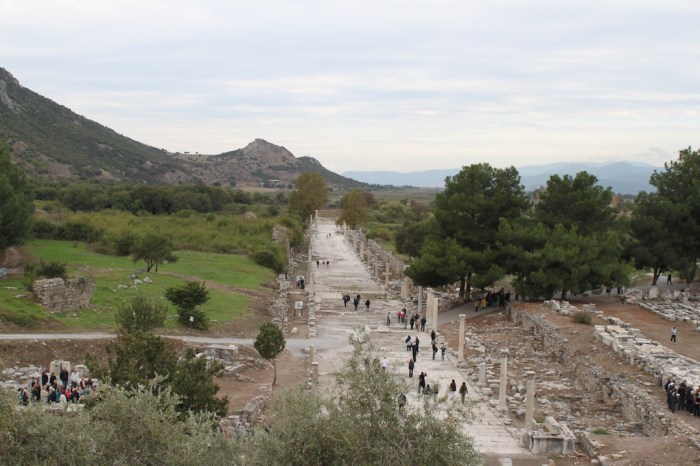
Curetes Way…the Fifth Avenue of Ephesus
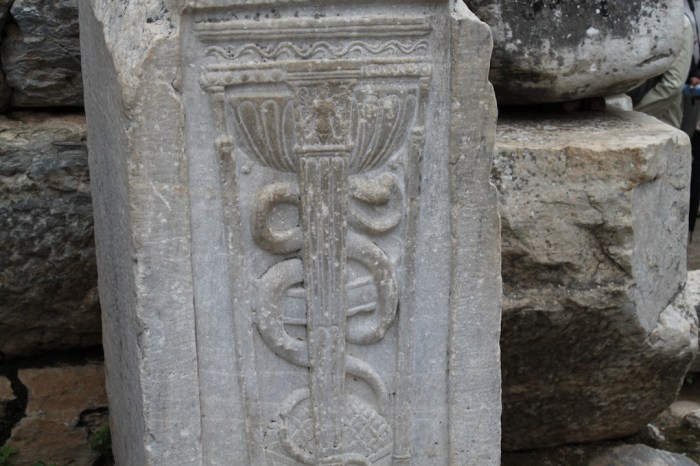
Ancient pharmacy snake symbol at Ephesus Lots of happy cats at Ephesus
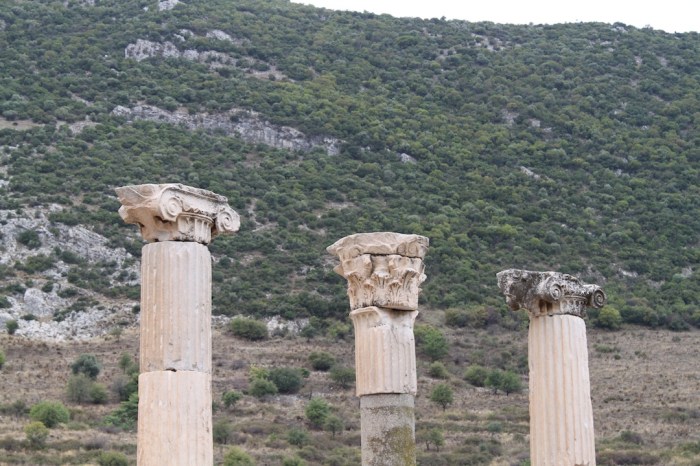
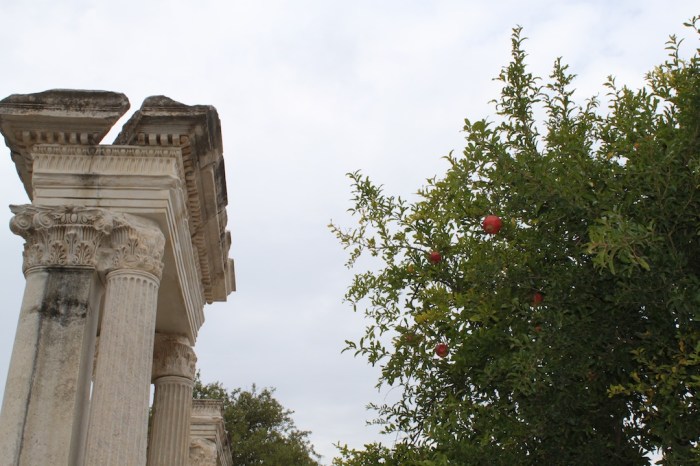
Corinthian and Ionic columns Pomegranates in bloom next to the ruins
The men’s latrines were the place to be
Trajan Fountain Temple of Hadrian
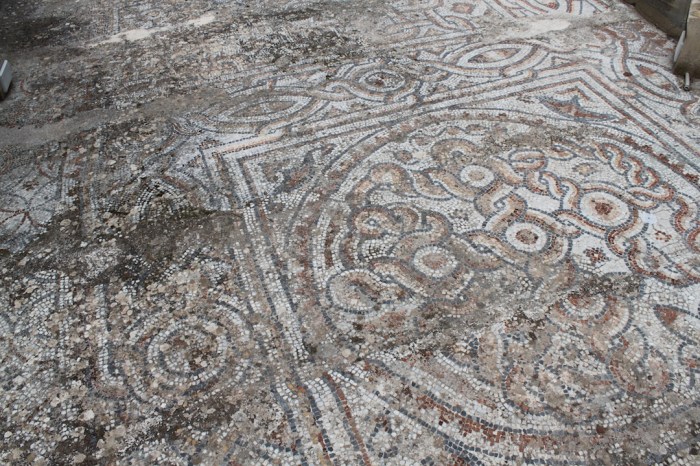
Mosaic floors of the terraced houses Where the old shops lined Curetes Way
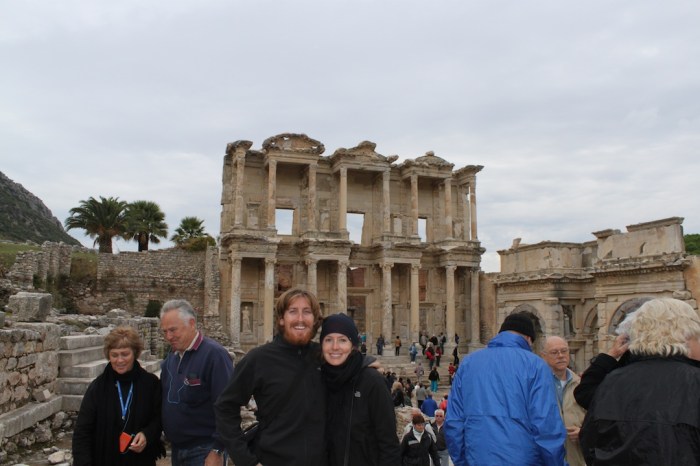
Library of Celsus
Library of Celsus
Library of Celsus Library of Celsus
Library of Celsus
Johnny and Anna…oh, and Library of Celsus
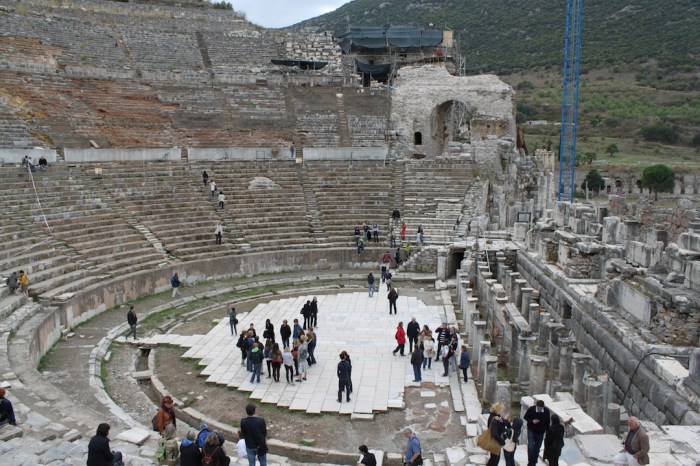
Harbour Street The Great Theatre
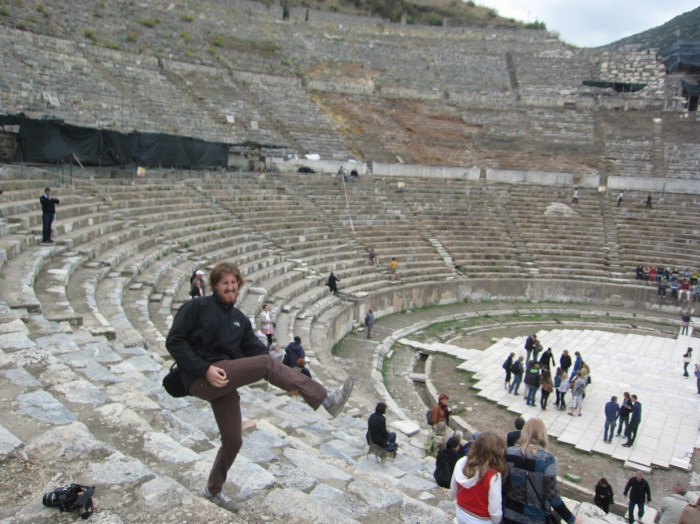
Shredding leg guitar solo at the Great Theatre

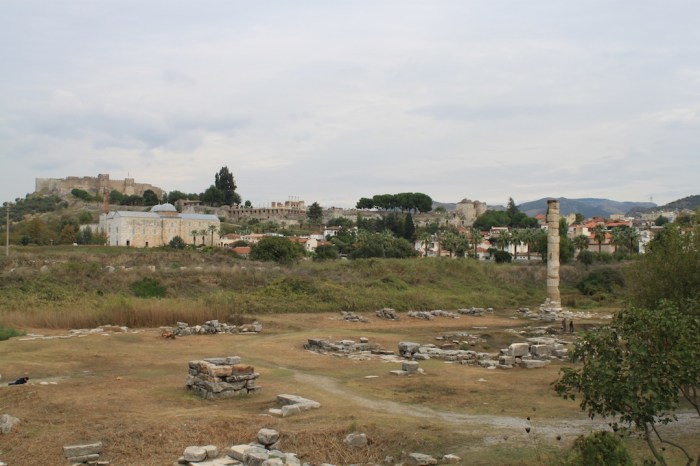
After our tour of Ephesus it was time for some grub. We sampled some Turkish delights, çay (tea), dried fruits and nuts from the region before heading to an all-you-can-eat restaurant featuring local fare. After filling our bellies we visited the Ephesus Museum, which contains some artifacts (coins, jewelry, scales) uncovered during excavation. Then we made our way to the Temple of Artemis, one of the original Seven Wonders of the Ancient World. When settling at Ephesus, Androclus and his people peacefully integrated with the Leleggian tribes already there, even incorporating some of the Leleggian beliefs into their own (take notes, Christopher Columbus). At the center of these beliefs and religious practices were goddesses of fertility, which evolved into the Artemis of Ephesus. Her devotees built her the largest temple in the world…larger than the Parthenon in Athens. Sadly, only one of the original 127 columns from the temple is still standing, and it’s topped by a silly looking stork’s nest, but we still got a good idea of what it could have looked like in its heyday.

A plethora of Turkish goodies
All that’s left of the Temple of Artemis…one of the original Seven Wonders of the Ancient World

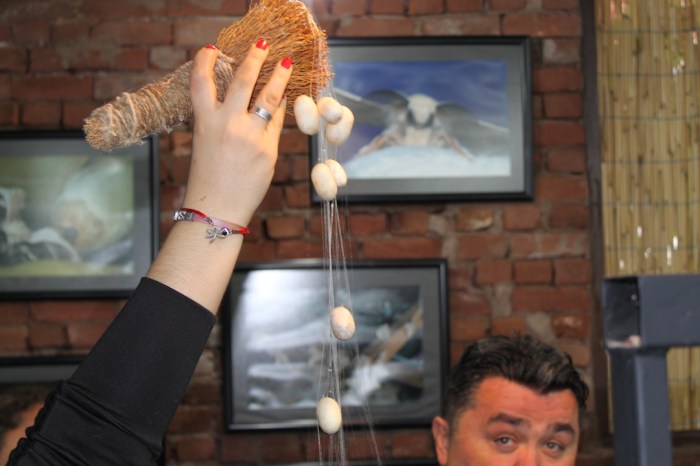
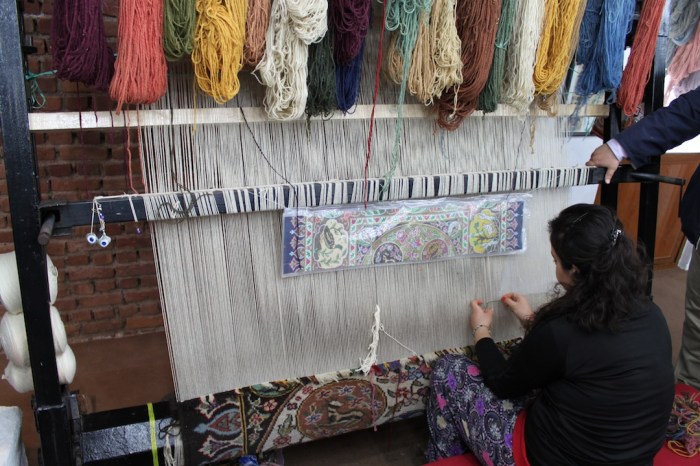
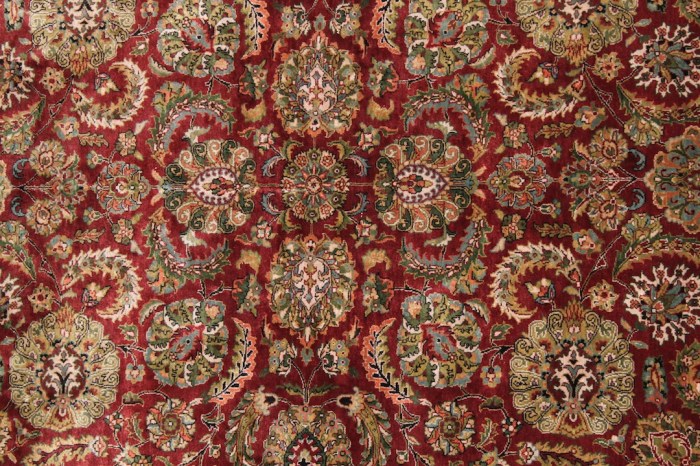
We wrapped up our tour with a visit to a local hand-made Turkish carpet shop, where we learned all about the carpet making process.  It’s intense!  We saw how they extract silk from silkworm cocoons using traditional methods.  Then we learned about the various knots that are used to weave carpets, and how the Turkish double knot makes Turkish carpets unique.  Watching the girls weave intricate patterns into these carpets one knot at a time was something to see.  The girls can only work for two hours a day because the process is so physically exhausting, and sometimes it takes up to two years for them to complete a single rug.

Removing the silk cocoons from the hot water Silk cocoons
Carpet weaving This girl was recreating the Last Supper in a carpet
I still don’t know how they make patterns this cool
Carpets to the ceiling Genuine fake watches!

Although we’ve only been in Turkey for a couple of days, one thing’s for sure…we’re not in Western Europe anymore. The food, the language, the people, the landscape, the buildings, the music…it’s so different from anything we’ve seen on this trip so far. While I’ve absolutely loved every place we’ve been, this is the first time on our trip it feels like we are in a faraway, exotic land. It’s almost like our vacation has ended and our adventure has begun, and we can’t wait to see what else Turkey (and soon South Africa and Southeast Asia!) has to offer.

October 16, 2011

Thanks Mom And Dad!

by Johnny

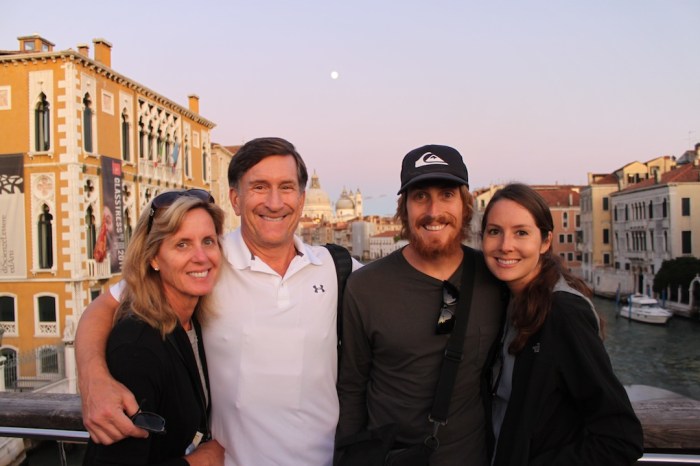
Thanks for the most amazing two weeks!  We love you and miss you lots!